






What's Happening?
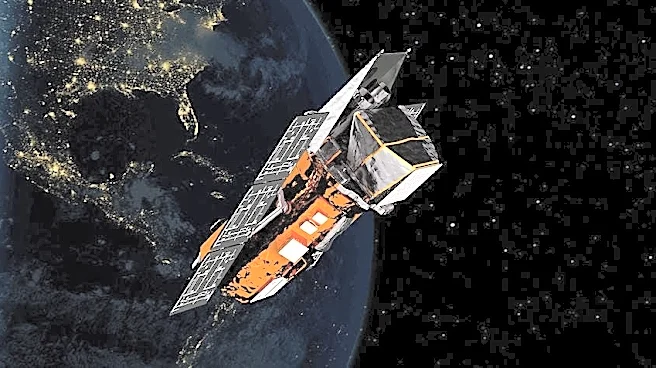
A NASA-supported small satellite, part of the Small Spacecraft Propulsion and Inspection Capability (SSPICY) mission, has lost contact with its owner and operator, Starfish Space. The mission, launched in October, was a technology demonstration designed
to navigate toward and inspect inoperable space objects of U.S. origin in low Earth orbit. Starfish Space initially established communications with its Otter spacecraft but lost contact during the commissioning phase, which involves turning on systems and calibrating instruments. Subsequent troubleshooting by both NASA and Starfish Space revealed an issue with the spacecraft’s fault protection system, which is erroneously keeping the radio turned off. As a result, the spacecraft is deemed unrecoverable, and two-way communication has not been reestablished.
Why It's Important?
The loss of the SSPICY mission's Otter spacecraft represents a setback for the development of in-space servicing, assembly, and manufacturing (ISAM) technologies, which are critical for a competitive U.S. space economy. While technology demonstrations inherently carry risks, this incident highlights the complexities and challenges involved in developing advanced space systems. The SSPICY mission aimed to demonstrate advanced propulsion, guidance, navigation, and control technologies, as well as an innovative articulating robotic boom. The data and experience gained from such missions are vital for iterating and improving future designs. The failure to reestablish communication means a loss of valuable data that would have informed the performance of these technologies and provided insights into orbital debris inspection. This could potentially delay the advancement of commercial capabilities in low Earth orbit and impact American leadership in this sector.
What's Next?
Despite the loss of the Otter spacecraft, Starfish Space intends to continue gathering information for NASA on the performance of its technologies and orbital debris inspection data during future missions with other Otter spacecraft. Greg Stover, director of the Advanced Research and Technology Division at NASA Headquarters, emphasized that technology demonstrations allow for rapid testing, learning from performance, and iteration to push the boundaries of what's possible. NASA will continue its collaboration with industry partners to tackle bold challenges. The SSPICY mission was funded by NASA's Advanced Research and Technology Division and managed by the Small Spacecraft and Distributed Systems program at NASA's Ames Research Center. The focus will now shift to analyzing the lessons learned from this anomaly to inform the design and fault protection systems of future missions.
Beyond the Headlines
The incident with the SSPICY mission underscores the inherent risks and high stakes in space technology development. While the immediate impact is the loss of a single spacecraft, the broader implication lies in the continuous learning curve for advanced space capabilities. Failures in technology demonstrations, though disappointing, often provide invaluable insights that accelerate innovation. This event will likely lead to a deeper examination of fault protection systems and communication protocols for small satellites, potentially influencing future design standards across the industry. It also highlights the importance of robust testing and redundancy in complex space missions. The commitment from NASA and Starfish Space to continue pursuing these technologies despite the setback demonstrates the long-term vision for a sustainable and advanced U.S. presence in space, emphasizing that even failures contribute to progress in this challenging domain.