






What's Happening?
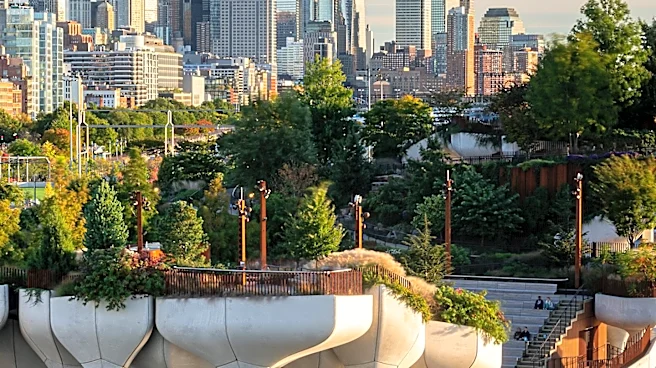
Governors Island in New York is hosting a new art installation by Mohawk artist Alan Michelson, titled 'The Oyster', which opens on July 30. This installation is part of a broader initiative called 'Reframing 1776: Land, Water, and the Work of Repair',
aimed at centering Indigenous voices and environmental histories. Michelson's work, commissioned by More Art in partnership with Billion Oyster Project and Governors Island Arts, features a sculpture filled with shells, resembling an oyster shell, to commemorate the Indigenous middens that once existed in the area. The installation is part of efforts to restore oyster reefs in New York Harbor, which have been significantly depleted due to industrialization. Alongside Michelson's work, Leslie Wayne's exhibition 'The Unintended Blues' at the Arts Center on Governors Island addresses climate change through art, featuring paintings and sculptures that highlight the fragility of landscapes.
Why It's Important?
The installations on Governors Island underscore the intersection of art, history, and environmental activism. By highlighting the historical significance of oysters and their role in the ecosystem, the projects aim to raise awareness about environmental degradation and the importance of restoration efforts. The Billion Oyster Project's involvement signifies a commitment to ecological restoration, which is crucial for improving water quality and increasing coastal resilience. These artistic endeavors not only educate the public about past environmental impacts but also inspire collective action towards a sustainable future.
What's Next?
The installations are expected to draw public attention and spark discussions on environmental conservation and Indigenous history. As the projects continue, components of Michelson's installation will be returned to the water to aid in oyster reef restoration. This ongoing engagement with the public and environmental stakeholders may lead to increased support for similar initiatives. Additionally, the exhibitions may influence future art projects that address environmental and cultural themes, fostering a deeper understanding of the interconnectedness of history, art, and ecology.