








What's Happening?
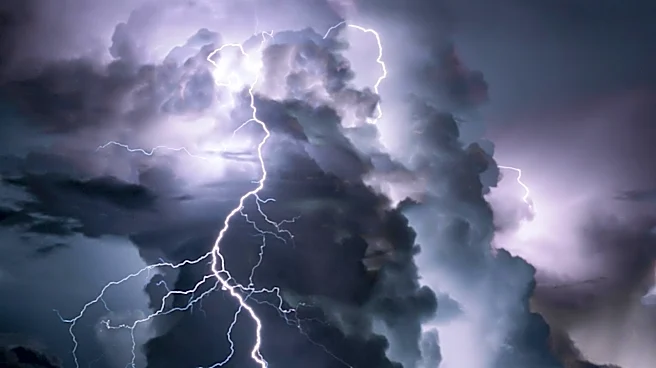
An American tourist from Kansas, aged 29, died after being struck by lightning on Sicily’s Mount Etna. The incident occurred on Sunday evening in an exposed area above the tree line. Italian firefighters rescued the man by helicopter, but he was later
declared dead by medical personnel. The man was found at approximately 1,400 meters (nearly 4,600 feet) in the Rocca Capra area. Authorities had closed certain areas of the volcano's slope to hikers due to prolonged volcanic activity, which had also led to the closure of Catania airport for most of the previous week. It remains unclear whether the tourist was in one of these restricted areas. Officials have noted that lightning strikes have caused more fatalities on Mount Etna in recent decades than volcanic activity itself, with the last eruption-related deaths occurring in 1987.
Why It's Important?
This incident highlights the inherent dangers associated with hiking active volcanoes, even when volcanic activity itself is not the direct cause of death. For U.S. citizens traveling abroad, it underscores the importance of adhering to local safety regulations and warnings, especially in hazardous natural environments. The closure of parts of Mount Etna and the nearby Catania airport due to volcanic activity demonstrate the significant impact such natural phenomena can have on regional infrastructure and tourism. The fact that lightning strikes are a more frequent cause of death than eruptions on Etna also serves as a critical reminder for tourists and guides about less obvious environmental risks in such locations. This event could prompt increased awareness campaigns for tourists regarding the diverse risks present in popular international travel destinations.
What's Next?
Following this tragic event, Italian authorities may review and potentially reinforce existing safety protocols and signage on Mount Etna, particularly concerning areas prone to lightning strikes and those closed due to volcanic activity. There could be increased scrutiny on how effectively these restrictions are communicated to and enforced among hikers, especially international tourists. For U.S. travel advisories, this incident might lead to updated warnings for citizens traveling to regions with active volcanoes, emphasizing not only volcanic hazards but also meteorological risks like lightning. The family of the deceased will likely be working with U.S. consular services for repatriation and other necessary arrangements.
Beyond the Headlines
The death of the American tourist on Mount Etna brings into focus the broader issue of risk assessment and personal responsibility in adventure tourism. While the allure of natural wonders like active volcanoes is strong, this event underscores the critical need for individuals to respect environmental warnings and understand the full spectrum of potential dangers, beyond the most obvious ones. It also raises questions about the balance between allowing public access to natural sites and ensuring visitor safety, especially in dynamic environments where conditions can change rapidly. The incident could spark discussions within the tourism industry about liability, insurance, and the adequacy of safety information provided to tourists engaging in high-risk activities.