





What's Happening?
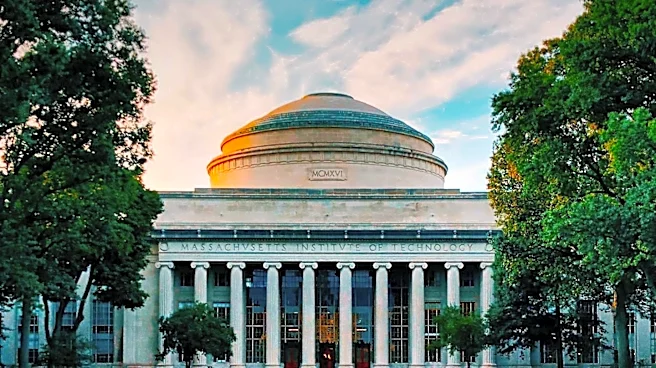
Researchers at MIT have developed Social.Wiki, an editable platform designed to allow users to build and customize their own decentralized social media networks. This initiative comes in response to growing user frustration with restrictive, AI-first
features and privacy concerns on major centralized platforms. Social.Wiki aims to provide a higher degree of user agency, enabling individuals and communities to tailor their social apps to specific needs. Unlike partially decentralized platforms such as Mastodon, which still rely on server administrators as 'gatekeepers,' Social.Wiki allows users to directly edit source code, either manually or with AI assistance. This approach eliminates the barrier of needing to run one's own server, a requirement for platforms like Mastodon and those powered by the AT Protocol, making decentralized social app creation more accessible.
Why It's Important?
The introduction of Social.Wiki signifies a potential shift in the landscape of social media, offering a user-centric alternative to the dominant centralized platforms. This development is important because it addresses fundamental user grievances regarding data ownership, privacy, and content moderation. By empowering users to customize their social environments, Social.Wiki challenges the traditional model where a single entity dictates platform rules and features. This could lead to a proliferation of niche, community-driven social spaces, fostering more relevant and less algorithmically manipulated interactions. For U.S. users, this could mean greater control over their online experiences and a potential reduction in exposure to unwanted content or privacy infringements prevalent on current major platforms. The project also highlights a broader trend towards decentralization in technology, driven by a desire for more democratic and transparent digital ecosystems.
What's Next?
The immediate next steps for Social.Wiki researchers involve enhancing the platform's capabilities, including adding end-to-end encryption for private messages and improving developer tools. The project anticipates that public frustration with existing major social media platforms will drive adoption, particularly within small communities. These communities, such as book groups, local sports teams, or parent-teacher associations, are seen as early adopters who can benefit from creating apps tailored to their specific activities. While Social.Wiki is not designed to be a global town square like Facebook or X, its success will be measured by its ability to connect like-minded users in micro-settings and allow these communities to grow and potentially merge. The platform is currently accessible for users to begin building their own decentralized communities.
Beyond the Headlines
Social.Wiki's approach to 'plural governance,' where each user can set their own rules for content visibility, presents a novel solution to the complex issue of content moderation in decentralized spaces. Instead of a central moderator, users filter content based on their preferences, promoting 'freedom of speech' alongside 'freedom from compelled listening.' This could have profound ethical and cultural implications, allowing for diverse online communities to coexist without imposing a single set of values or censorship standards. The project also underscores the ongoing debate about the balance between user autonomy and platform responsibility, suggesting a future where digital spaces are less about mass broadcasting and more about curated, community-specific interactions. This shift could lead to a more fragmented but potentially more authentic and user-satisfying online experience.