

What's Happening?
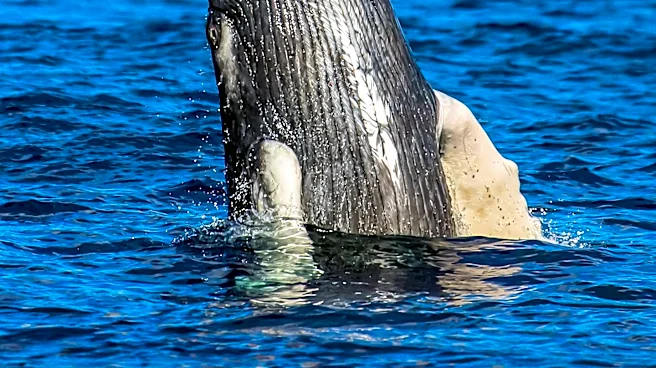
An international team of researchers, including scientists from the University of St Andrews in Scotland, has successfully completed whole genome sequencing of whales using samples of 'whale snot' collected by aerial drones. This marks the first time
that complete whale genomes have been sequenced without any physical intervention, such as biopsies via darts, close boat approaches, or relying on stranded animals or historical specimens. Traditionally, obtaining whale genomic data required invasive methods that could disturb the animals or were not always feasible due to regulations or species-specific challenges. To overcome these obstacles, the research team attached sterile petri dishes to commercially available drones, allowing them to collect respiratory exhalations (snot) from whales as they surfaced. This non-invasive technique provides a new, less disruptive method for gathering crucial genetic material from these marine giants.
Why It's Important?
This technological advancement is critical for whale conservation efforts worldwide. Genomic data provides invaluable insights into population health, including genetic diversity, inbreeding levels, and population size estimates. Such information is essential for developing effective conservation strategies and understanding the impacts of environmental changes on whale populations. The previous reliance on invasive biopsy sampling posed ethical concerns and practical limitations, often making it difficult to study certain species or in specific regions. By enabling non-invasive sample collection, drones can now facilitate broader and more frequent genetic monitoring, leading to a more comprehensive understanding of whale populations without causing stress or harm to the animals. This method opens new avenues for research, allowing scientists to track individual whales, determine their sex, and assess their overall health more efficiently and ethically.
What's Next?
The successful deployment of drones for whale genome sequencing is expected to lead to wider adoption of this non-invasive method in marine biology and conservation. Researchers can now expand their studies to include species that were previously difficult to sample or in areas where traditional methods are restricted. This will likely result in a significant increase in the amount of genomic data available for various whale species, enhancing our understanding of their biology, migration patterns, and evolutionary history. Future developments may include refining drone technology for even more efficient and targeted sample collection, as well as integrating other non-invasive data collection methods. This approach could also be adapted for studying other large marine mammals, further revolutionizing wildlife research and conservation practices globally.
Beyond the Headlines
Beyond the immediate scientific benefits, this innovation carries significant ethical and practical implications for wildlife research. The shift from invasive to non-invasive sampling methods aligns with growing calls for more humane and less disruptive approaches in animal studies. This technological leap could set a new standard for how researchers interact with vulnerable wildlife populations, fostering a more respectful and sustainable scientific practice. Furthermore, the ability to collect data without direct human intervention reduces risks to both researchers and animals, especially in challenging marine environments. This method also democratizes access to valuable genetic data, potentially enabling more research institutions and conservation groups with limited resources to participate in large-scale genomic studies, thereby broadening the scope and impact of global conservation efforts.