





What's Happening?
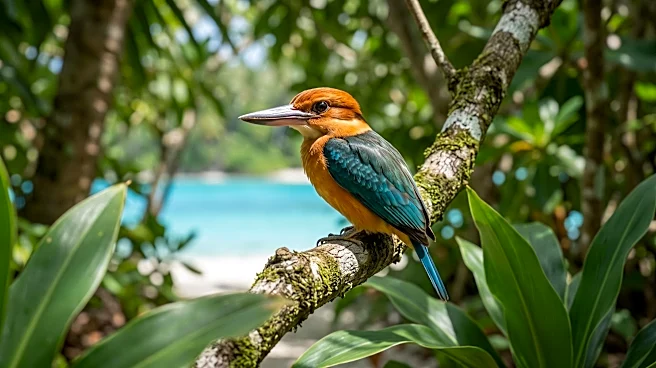
Brookfield Zoo Chicago is actively involved in an international collaboration, the Sihek Recovery Program, aimed at restoring the population of the sihek, also known as the Guam kingfisher. This bird species became extinct in the wild on Guam due to the accidental
introduction of the brown tree snake in the 1940s, which also decimated other native bird, bat, and lizard species. The program focuses on hatching and fledging a genetically diverse population of these birds to ensure the species' preservation and establish a healthy wild population once again. In 2024, the first nine sihek, including a male named Yayas from Brookfield Zoo, were transported to Palmyra Atoll, an uninhabited wildlife refuge approximately 1,000 miles from Honolulu. Palmyra Atoll was chosen for its lack of predators and its protected status as a Nature Conservancy Preserve and U.S. Fish and Wildlife Service National Wildlife Refuge.
Why It's Important?
This initiative is crucial for biodiversity conservation, representing a significant effort to reverse the impact of invasive species on native wildlife. The sihek's plight highlights the devastating consequences of ecological imbalances caused by human activities. The success of the Sihek Recovery Program could serve as a model for future conservation projects globally, demonstrating the effectiveness of collaborative international efforts and captive breeding programs in preventing species extinction. For the U.S., particularly its Pacific territories, it underscores the importance of protecting unique ecosystems and addressing the threats posed by invasive species to native fauna. The program also emphasizes the vital role zoos play in conservation, extending beyond public education to active species recovery.
What's Next?
The Sihek Recovery Program plans to send up to eight more sihek to Palmyra Atoll later this year. A total of 10 sihek from various Association of Zoos and Aquariums-accredited institutions, including Brookfield Zoo, the Cincinnati Zoo & Botanical Garden, the National Aviary in Pittsburgh, the Oregon Zoo in Portland, the San Diego Zoo Safari Park, the Sedgwick County Zoo in Wichita, Kansas, and the St. Louis Zoo, will be quarantined at Disney's Animal Kingdom in Central Florida for two months before their transfer. Cody Hickman, director of avian care and conservation at Brookfield Zoo Chicago, expressed hope that another bird from their zoo will contribute to the sihek's return to the wild, emphasizing the global nature of this conservation effort. The last wild sihek sighting was in 1988, and currently, there are only 150 individuals alive in total.
Beyond the Headlines
The story of the sihek and the brown tree snake serves as a stark reminder of the interconnectedness of ecosystems and the long-lasting, often unforeseen, impacts of human actions. The accidental introduction of a single species can trigger a cascade of extinctions, fundamentally altering an ecosystem. This conservation effort goes beyond simply saving a bird; it represents an attempt to restore ecological balance and cultural heritage, as the sihek is an integral part of Guam's natural history. The challenges of reintroducing a species into the wild, including finding suitable predator-free habitats and ensuring genetic diversity, highlight the complexity and dedication required for successful conservation in an increasingly human-dominated world. It also prompts reflection on the ethical responsibilities humans have towards protecting global biodiversity.