

What's Happening?
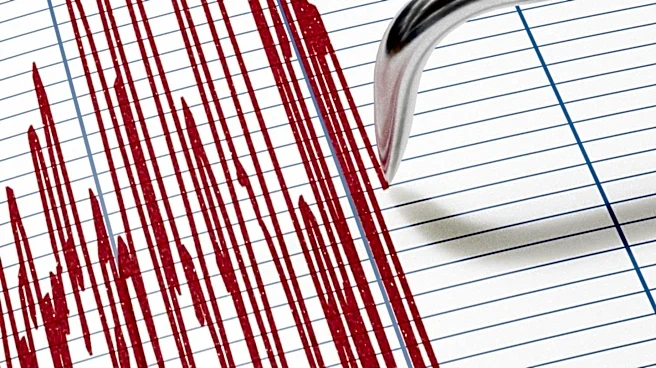
A magnitude 5.5 earthquake struck the Aleneva, Alaska, region on Tuesday, according to the United States Geological Survey (USGS). The seismic event occurred at 10:34 a.m. local time (2:34 p.m. EST), approximately 57 miles north-northwest of Aleneva, at a depth
of about 54 miles. Residents in the affected areas reported light to moderate shaking. The USGS indicated that many people indoors felt the shaking, while fewer reported feeling it outdoors. Reports included disturbances to dishes, windows, and doors, with some individuals noting cracked walls and describing the sensation as if a truck had hit their building. Parked vehicles were also observed to rock noticeably. As of now, there are no immediate reports of damage or injuries resulting from the earthquake.
Why It's Important?
This earthquake highlights the ongoing seismic activity in Alaska, a region situated along the Pacific Ring of Fire, which is known for frequent seismic events. While a magnitude 5.5 earthquake is considered moderate, its occurrence underscores the importance of earthquake preparedness for residents and infrastructure in the area. The reports of cracked walls and significant shaking suggest that even moderate quakes can cause concern and potential minor structural issues. For local authorities, such events serve as reminders to review emergency response protocols and public awareness campaigns regarding earthquake safety. The lack of immediate damage or injury reports is positive, but continuous monitoring and assessment are crucial for understanding the full impact and ensuring community safety in seismically active zones.
What's Next?
Authorities will likely continue to monitor the region for any aftershocks and assess potential damage in the coming hours and days. Residents are advised to remain vigilant and follow any safety guidelines issued by local emergency services. The USGS will continue to analyze seismic data to provide further insights into the earthquake's characteristics and any subsequent activity. Local infrastructure, including buildings and utilities, may undergo inspections to ensure structural integrity, particularly in areas where shaking was most pronounced. Public information campaigns on earthquake preparedness may also be reinforced to ensure residents are aware of safety measures during and after seismic events.
Beyond the Headlines
The recurring seismic activity in Alaska, exemplified by this earthquake, points to the broader geological dynamics of the Pacific Ring of Fire. This region is characterized by the movement of tectonic plates, leading to frequent earthquakes and volcanic activity. For Alaska, this means a constant need for resilient infrastructure and a well-informed populace. The event also subtly underscores the challenges of living in a geologically active area, where the threat of larger, more destructive earthquakes is ever-present. It prompts ongoing scientific research into earthquake prediction and mitigation strategies, aiming to minimize risks to human life and property in such vulnerable regions. The experience of residents, from disturbed household items to cracked walls, serves as a tangible reminder of the Earth's dynamic nature.