

What's Happening?
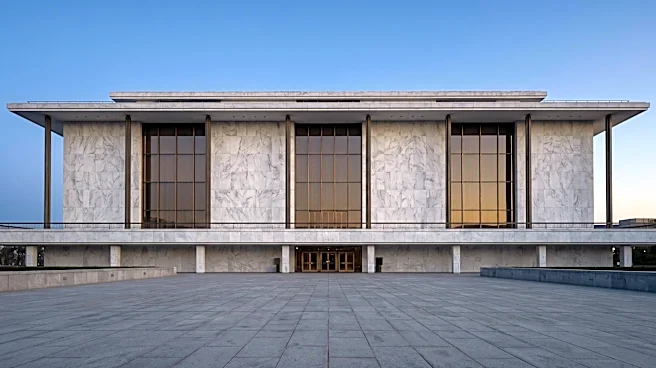
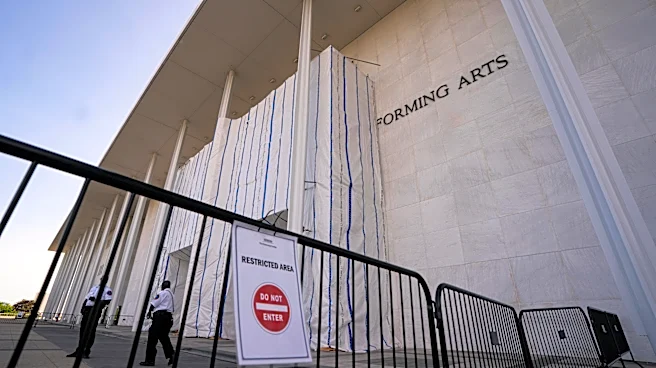
The Trump administration has threatened the demolition of the Kennedy Center if the arts institution is not permitted to proceed with its renovation plans, which include adding President Trump's name to the building. According to a court filing by Justice
Department attorney Brantley T. Mayers, without these efforts, the Center would "deteriorate further into an unsafe, decrepit structure that will be required to be taken down." Mayers suggested that an outdoor amphitheater overlooking the Potomac River could be built in its place, though acknowledging it would "fail to adequately honor" President John F. Kennedy. The filing describes the Kennedy Center as "structurally unsound, fundamentally unsafe, and embarrassing to the Nation’s Capital." The administration asserts that the Center's board, appointed by President Trump, believes his efforts and prestige are the "sole hope for the Center’s financial survival, and structural renewal." This comes amidst a renewed attempt by the board to add President Trump's name to the building, despite a previous judicial ruling that only Congress has the authority to rename the site.
Why It's Important?
This development is significant due to its implications for a major national cultural institution and the ongoing legal and political battle over its future. The Kennedy Center, established as a living memorial to President John F. Kennedy, holds immense cultural and historical value for the United States. The threat of demolition, even if hypothetical, raises concerns about the preservation of national heritage and the potential politicization of cultural institutions. The dispute also highlights a broader conflict regarding the authority to name and manage federal properties, with a federal judge previously ruling that only Congress can change the Center's name. The administration's argument that President Trump's involvement is crucial for the Center's financial and structural survival suggests a leverage tactic, potentially impacting future funding and governance models for similar institutions. The situation also underscores the tension between executive influence and judicial oversight in matters of national cultural policy.
What's Next?
A hearing is scheduled in Washington D.C. to address the planned name change and the proposed closure for renovations. This hearing will be a critical juncture in determining the immediate future of the Kennedy Center. The appeals court's previous rejection of the administration's request to keep President Trump's name in place indicates a continued legal challenge to the board's actions. Depending on the outcome of the hearing, there could be further legal appeals, potential congressional intervention, or a re-evaluation of the renovation and naming proposals. Stakeholders, including members of Congress, cultural preservation groups, and the Kennedy family, are likely to continue monitoring the situation closely and may react to any decisions made. The long-term structural and financial stability of the Kennedy Center, as well as its governance, will remain under scrutiny.
Beyond the Headlines
The controversy surrounding the Kennedy Center extends beyond immediate renovation and naming disputes, touching upon fundamental questions of national memory, cultural stewardship, and the separation of powers. The administration's assertion that the Center is "embarrassing to the Nation’s Capital" and its suggestion of an alternative structure raise concerns about the respect for historical institutions and the potential for political agendas to influence cultural policy. The legal battle over the naming rights underscores the importance of established protocols for honoring national figures and the role of Congress in safeguarding such legacies. This situation could set a precedent for how future administrations interact with and potentially reshape national cultural landmarks, prompting a deeper examination of the balance between executive authority, legislative oversight, and the preservation of collective heritage. The debate also highlights the ethical considerations involved when private donations and political influence intersect with public cultural institutions.