






What's Happening?
South Korea's Finance Minister, Koo Yun-cheol, issued an apology following significant financial losses incurred by retail investors who engaged in leveraged bets on stocks. This situation arose after the introduction of single-stock leveraged Exchange
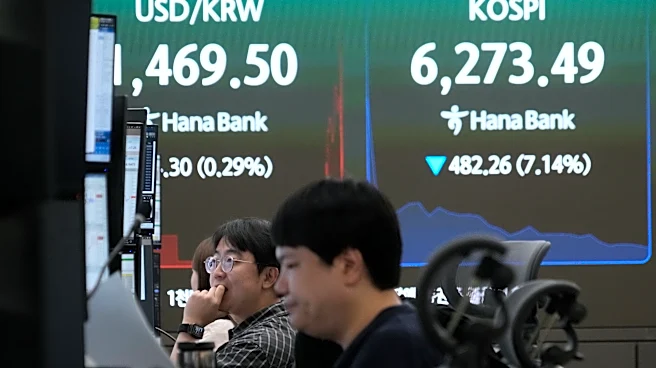
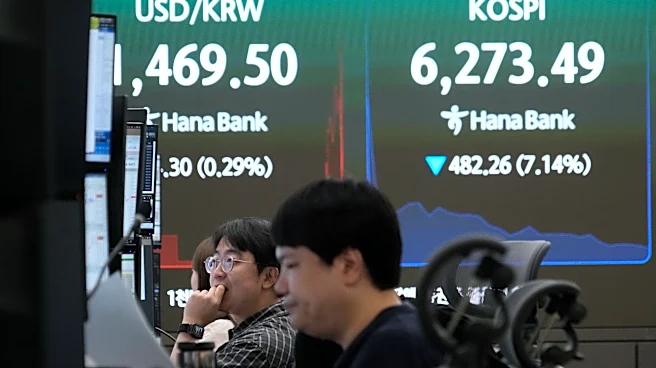
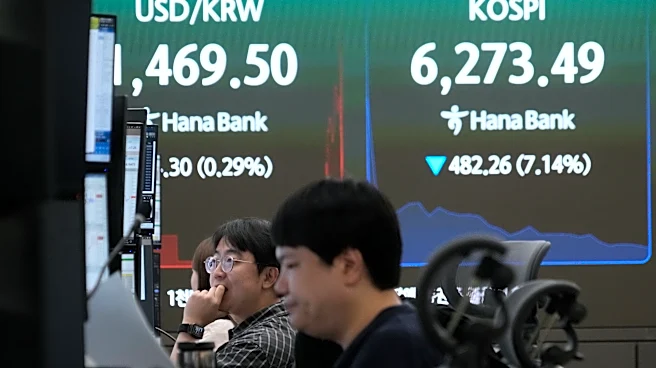
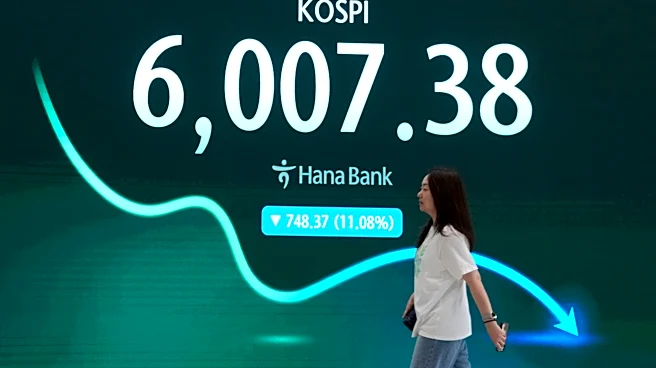
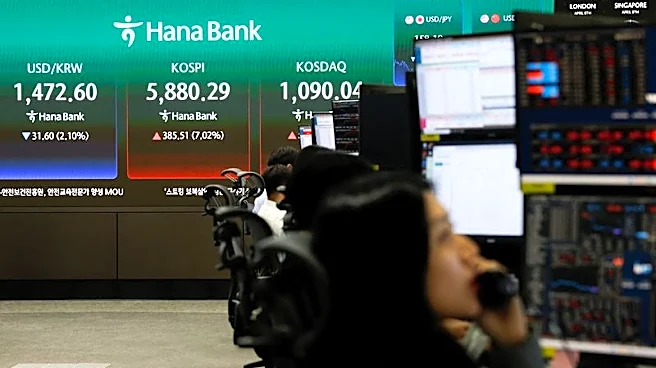
Traded Funds (ETFs) earlier in the year. These financial products attracted substantial interest from Korean retail investors, who invested a net total of 14 trillion won ($9.7 billion), compared to approximately 2 trillion won by foreign investors. However, the speculative trading boom that initially drove one of the world's most dynamic equity markets has led to substantial losses as the Kospi index experienced a sharp correction, particularly in chip stocks. The downturn has been especially severe for investors in single-stock leveraged ETFs linked to major chip manufacturers like Samsung Electronics and SK Hynix, with some products losing over 80% of their value since their peak.
Why It's Important?
The financial losses faced by retail investors in South Korea highlight the risks associated with leveraged financial products, particularly in volatile markets. The situation underscores the need for regulatory oversight and investor education to prevent similar occurrences in the future. The Financial Services Commission is considering restricting access to these high-risk products to professional investors only, which could protect inexperienced investors from significant financial harm. This development also reflects broader market trends, as the downturn in chip stocks has global implications, affecting not only South Korean investors but also international markets reliant on semiconductor production. The incident may prompt other countries to reevaluate their regulatory frameworks concerning complex financial instruments.
What's Next?
The South Korean Financial Services Commission is contemplating measures to limit access to single-stock leveraged ETFs to professional investors, potentially reducing the risk of significant losses for retail investors. Additionally, there may be legislative efforts to lower the leverage multiple of these products, pending approval from lawmakers. These regulatory changes could lead to a more stable investment environment, though they may also limit market participation and liquidity. The response from investors and financial institutions will be crucial in shaping the future landscape of South Korea's financial markets.