



What's Happening?
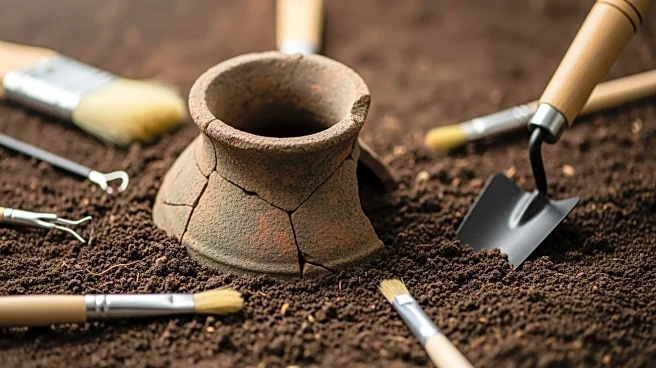
An archaeological excavation near Lincoln has revealed evidence of human activity dating back to around 3,000 BC. The dig, conducted by Allen Archaeologist Ltd, is part of preparations for a new £208 million bypass. Among the discoveries are a 5,000-year-old
stone axe head and remains of Roman buildings. The site, located near Bracebridge Heath, was initially expected to be solely Roman, but findings suggest much earlier habitation. The excavation, which began in October 2025, is set to conclude in early 2026. The unearthed artifacts, including Roman pottery and personal items, will be handed over to the Lincoln Museum. The area will eventually be covered by the new road once documentation is complete.
Why It's Important?
The discovery provides significant insights into the history of the region, revealing a timeline of human activity that predates Roman Britain. This finding enriches the understanding of Neolithic life in Lincolnshire, an area previously not well-documented for this period. The Roman artifacts also offer a glimpse into the lifestyle of affluent Roman families living outside the city of Lincoln, which was a major town in Roman Britain. These findings contribute to the broader historical narrative of the area, offering new perspectives on the use of the landscape and the social dynamics of past communities.
What's Next?
The construction of the bypass is expected to begin in early 2026, following the completion of the archaeological work. The artifacts will be preserved and studied further at the Lincoln Museum, providing opportunities for ongoing research and public education. The findings may prompt additional archaeological interest and exploration in the region, potentially leading to more discoveries that could further illuminate the area's ancient history.
Beyond the Headlines
The discovery of the Neolithic axe head, a high-status item, suggests the site may have been a significant meeting or trading point for ancient communities. This challenges previous assumptions about the area's historical significance and could lead to a reevaluation of the region's role in prehistoric trade networks. The preservation of such artifacts highlights the importance of archaeological work in understanding human history and the need to balance development with heritage conservation.