
What's Happening?
The United States is facing a significant resurgence of measles, with over 5,000 confirmed cases reported nationwide in 2026, marking the highest number since 1991. This increase has led to outbreaks across
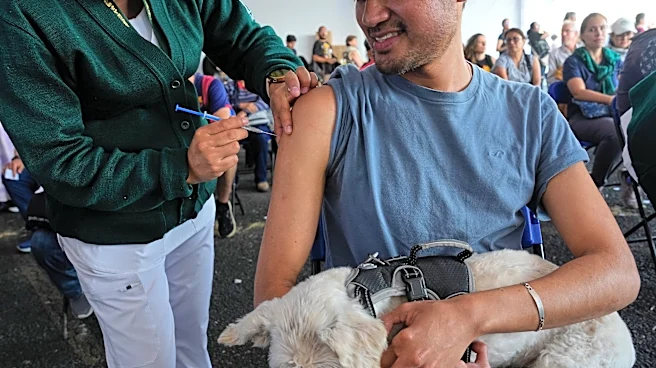
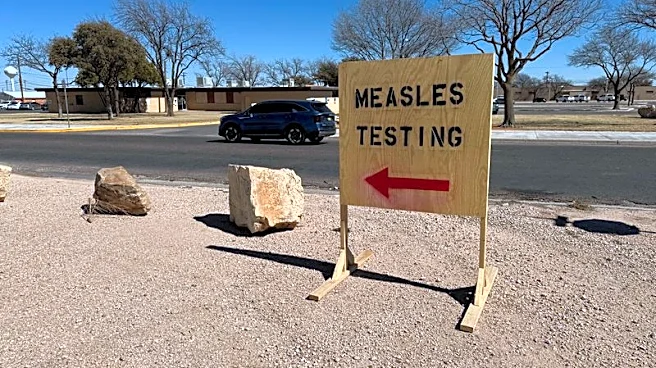
47 jurisdictions, prompting public health officials to confront renewed transmission of a disease previously eliminated in 2000. The Pan American Health Organization (PAHO) is currently reviewing the U.S.'s measles elimination status, assessing whether sustained domestic transmission has returned. A key factor contributing to this resurgence is the decline in childhood vaccination coverage. The CDC's 2025-2026 school vaccination data indicates that only 92.4% of kindergarten students received the measles, mumps, and rubella (MMR) vaccine, falling below the approximately 95% coverage generally required for community protection. Approximately 280,000 kindergarten students attended school without complete MMR vaccination documentation, and exemptions for required immunizations rose to 4.2% from 3.6% the previous year. Localized outbreaks have been reported in states such as Arizona, North Carolina, Oregon, California, and Georgia, highlighting the geographic reach of this public health challenge.
Why It's Important?
The potential loss of the U.S.'s measles elimination status, held since 2000, represents a significant setback in public health achievements and carries substantial implications. Measles is highly contagious and can lead to severe complications, including pneumonia, encephalitis, hospitalization, and even death, particularly among young children and immunocompromised individuals. The CDC estimates that one in five unvaccinated people who contract measles are hospitalized. A widespread resurgence would strain healthcare systems, schools, and local health departments, which are responsible for testing, contact tracing, and exposure notifications. Economically, responding to outbreaks is far more costly than prevention through vaccination. The decline in vaccination rates also signals a broader public health concern regarding vaccine hesitancy and the spread of misinformation, which could impact other vaccine-preventable diseases. Maintaining robust funding for global immunization programs is crucial, as these efforts strengthen vaccination systems and help contain outbreaks before they spread internationally, ultimately safeguarding communities within the U.S.
What's Next?
The Pan American Health Organization (PAHO) is conducting a review from November 10-13, 2026, to determine if the United States still meets the requirements for maintaining its measles-free status. This assessment will scrutinize vaccination coverage, disease surveillance, laboratory findings, and evidence of sustained transmission. Under PAHO criteria, elimination status can be lost if the same measles virus lineage spreads continuously for at least 12 months. Regardless of PAHO's decision, the current situation necessitates immediate action to restore vaccination coverage, strengthen disease surveillance, and improve outbreak response mechanisms to prevent further transmission. Policymakers will likely face pressure to address declining vaccination rates and consider future funding priorities for immunization programs. Public health campaigns may be intensified to counter misinformation and encourage vaccination, particularly among kindergarten students where coverage has fallen below community protection thresholds. Local health departments will continue to manage ongoing outbreaks and implement measures to limit spread.
Beyond the Headlines
The resurgence of measles in the U.S. highlights deeper societal challenges beyond immediate public health concerns. It underscores the fragility of public health achievements when faced with declining trust in medical science and the proliferation of misinformation. The increase in vaccination exemptions and the drop in MMR coverage reflect a growing trend of vaccine hesitancy, which can be influenced by various factors including personal beliefs, social media narratives, and community-specific attitudes. This situation also brings to light ethical considerations regarding individual liberties versus collective public health, particularly concerning mandatory vaccination policies for school entry. The geographic disparities in vaccination coverage suggest that socioeconomic factors, access to healthcare, and targeted misinformation campaigns may play a role in creating vulnerable pockets within the population. The long-term implications could include a re-evaluation of public health communication strategies, increased investment in community-level health education, and potentially stricter enforcement of vaccination requirements to protect herd immunity.