






What's Happening?
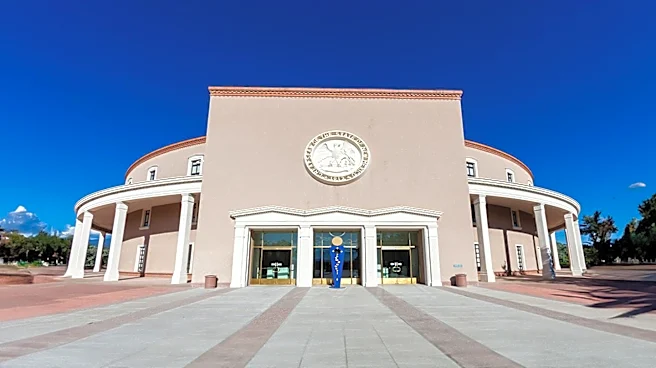
The New Mexico Supreme Court has issued a divided ruling, blocking attempts by Democrats to place replacement candidates on the ballot for two state House races. This decision means that Republican candidates will run unopposed in these two districts,
as the deadline for write-in candidates has already passed. The legal dispute arose after the initial Democratic nominees, Joseph Hernandez of Shiprock and Elise Falanga Taylor of Rio Rancho, withdrew from their respective races. Hernandez withdrew following reports of a disturbance at a Chicago hotel, while Falanga Taylor also dropped out. Democrats attempted to replace them with Anthony Allison and Matthew Herman, respectively. The core of the legal argument centered on the interpretation of state statutes regarding the deadlines for filling ballot vacancies, specifically whether the 90-day and 70-day deadlines should be read in conjunction.
Why It's Important?
This ruling has significant implications for the electoral process and political landscape in New Mexico. By preventing Democrats from fielding replacement candidates, the Supreme Court's decision effectively grants Republican candidates uncontested victories in two state House districts. This outcome could impact the balance of power in the state House of Representatives, where Democrats currently hold a 42-26 majority. The ruling also highlights the critical importance of adhering to election deadlines and the precise interpretation of election laws. The state Republican Party lauded the decision, emphasizing the need for parties to follow established rules, while the attorney for the Democratic candidates expressed disappointment, arguing that the court's judgment superseded voters' ability to choose their preferred candidates. This legal precedent could influence how political parties manage candidate withdrawals and replacements in future elections.
What's Next?
With the Supreme Court's ruling, the Republican candidates in the affected districts will proceed to the general election without opposition. The state judge in Aztec has been directed to issue a decision reflecting the Supreme Court's legal conclusion, and the order in the Bernalillo case has been affirmed. The Secretary of State's Office has supported the ruling, emphasizing the importance of election code deadlines for an orderly and fair electoral process. While this specific ruling is unlikely to drastically shift the overall balance of power in the state House, it does bolster Republican efforts to gain seats. All 70 House seats are up for election this year, though less than half are contested. Political parties will likely review their internal processes for candidate selection and withdrawal to avoid similar issues in future election cycles.
Beyond the Headlines
The Supreme Court's decision delves into the intricate balance between party autonomy in candidate selection and the strictures of election law. The debate over whether the 90-day and 70-day deadlines for filling vacancies should be interpreted separately or together underscores the complexities of statutory interpretation in electoral contexts. This case could prompt legislative review of New Mexico's election code to clarify ambiguities regarding candidate replacement timelines, potentially leading to amendments that provide clearer guidance for political parties and election administrators. Furthermore, the incident involving Representative Joseph Hernandez's withdrawal due to personal conduct issues highlights the broader scrutiny faced by public officials and the potential impact of personal controversies on political careers and party strategies. The ruling also raises questions about voter disenfranchisement when candidates are removed without a clear path for replacement, potentially affecting voter engagement and trust in the electoral system.