
What's Happening?
Senator Andy Kim (D-N.J.), along with Democratic Senate colleagues including Senators Tim Kaine (D-VA), Michael Bennet (D-CO), Brian Schatz (D-HI), Tammy Duckworth (D-IL), and Jeff Merkley (D-OR), has
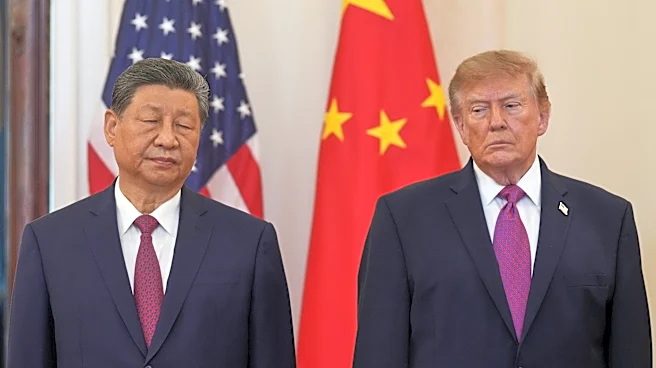
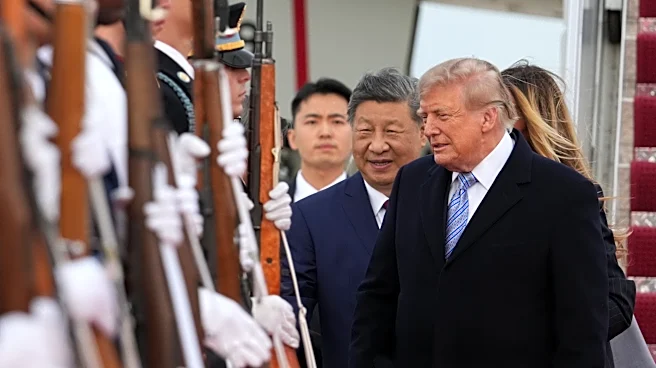
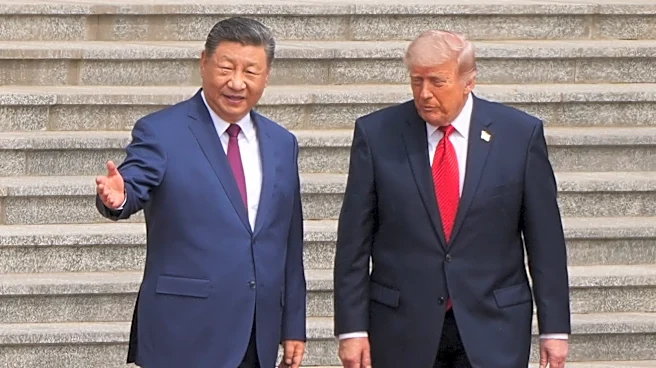
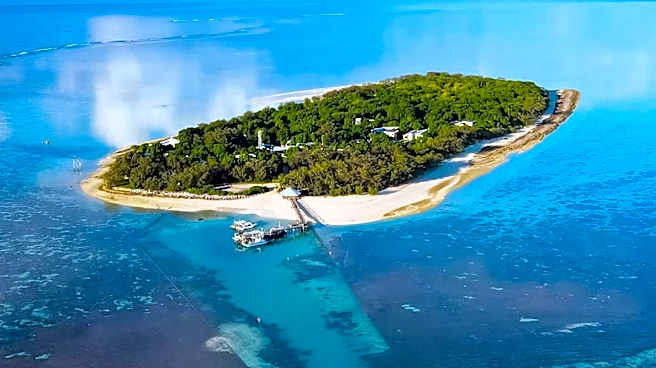
sent a letter to President Trump. The letter urges President Trump to raise concerns about China’s renewed island-building campaign in the South China Sea during his summit with China’s President Xi Jinping. The Senators express concern that the Trump administration appears to be overlooking this activity while pursuing diplomacy with China. They highlight that China has resumed artificial island-building after a decade of inactivity, suggesting that current U.S. efforts to bolster frontline states and deter Chinese maritime coercion have been insufficient. The letter points out China's previous claim of 90 percent of the South China Sea, which lacks legal basis under international law and has faced international condemnation. China's artificial islands are used to house surveillance technology, military aircraft runways, and military bases, posing a threat to regional actors like Taiwan, Vietnam, and the Philippines. Most recently, China has begun dredging and land reclamation at "Antelope Reef."
Why It's Important?
This issue is important because China's continued expansion and militarization of artificial islands in the South China Sea directly challenges international law and U.S. policy in the Indo-Pacific region. A Chinese presence on Antelope Island could further solidify its territorial claims, reinforcing a 'might makes right' approach that undermines global norms. The potential for air and naval facilities on such islands provides the People’s Liberation Army, China Coast Guard, and Chinese Maritime Militia with additional platforms to intimidate, harass, and coerce U.S. allies and partners in the region. Experts warn that these islands could also be used to surveil and restrict U.S. naval activity, impacting freedom of navigation and regional stability. This development has significant implications for U.S. national security and its alliances, as it could lead to increased tensions, disrupt trade routes, and challenge the U.S.'s strategic influence in a critical geopolitical area. The Senators' letter underscores the need for the U.S. to actively counter these actions to protect its interests and those of its allies.
What's Next?
The immediate next step is President Trump's summit with China's President Xi Jinping, where the Senators hope the issue of China's island-building will be addressed. The outcome of this discussion, if it occurs, could influence future diplomatic and strategic approaches by the U.S. and its allies. Should President Trump not raise the issue or if discussions prove unfruitful, the Democratic Senators may continue to press the administration through legislative means or public statements to adopt a more assertive stance. China's response to any U.S. pressure, or lack thereof, will also be critical in determining the future trajectory of its activities in the South China Sea. Regional allies and partners, such as Taiwan, Vietnam, and the Philippines, will be closely watching these developments, as their security and sovereignty are directly impacted. The U.S. may also consider further actions to bolster its presence and support for these frontline states, potentially through increased military exercises or diplomatic initiatives.
Beyond the Headlines
Beyond the immediate diplomatic exchanges, China's actions in the South China Sea represent a broader challenge to the international rules-based order. The construction of artificial islands and their militarization reflect China's long-term strategy to assert its dominance in the region and reshape the geopolitical landscape. This approach has ethical implications regarding sovereignty and the peaceful resolution of disputes, as China's claims often disregard international legal rulings. The ongoing tensions could trigger a regional arms race, as other nations seek to enhance their defense capabilities in response to China's growing military footprint. Economically, disruptions in the South China Sea, a vital global shipping lane, could impact international trade and supply chains. The U.S.'s response will not only define its relationship with China but also its credibility as a global leader and guarantor of maritime security. The situation highlights the complex interplay of military power, economic interests, and international law in shaping global affairs.