
What's Happening?
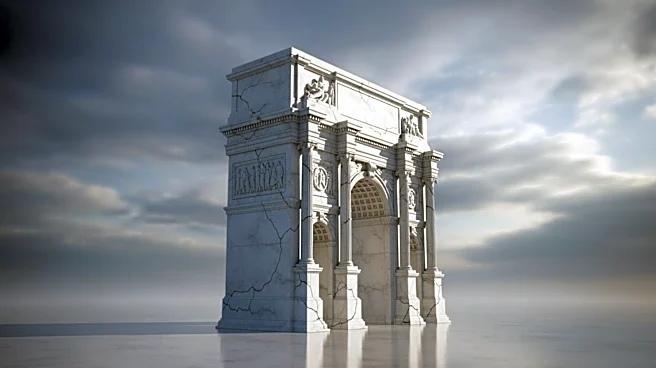
A proposal by President Donald Trump to construct a monumental triumphal arch in Washington, DC, has faced significant opposition from veterans, preservationists, and the public. During a recent National
Capital Planning Commission (NCPC) meeting, emotional testimonies were presented against the arch, which is planned near Arlington National Cemetery. Despite the opposition, the NCPC, largely composed of administration loyalists, voted to advance the conceptual plans. The proposal has sparked legal debates, particularly concerning the 1910 Height of Buildings Act, which limits construction height in the capital. The commission's chair, William Scharf, argued that the act does not apply to federal projects, citing historical precedents. Public comments overwhelmingly opposed the arch, with many expressing concerns about its impact on the cemetery and its symbolic implications.
Why It's Important?
The proposed triumphal arch has become a focal point for broader discussions about federal architecture, historical preservation, and public space usage in Washington, DC. The opposition highlights tensions between the administration's vision for national monuments and public sentiment, particularly regarding the arch's location near a revered military burial ground. The legal arguments surrounding the Height of Buildings Act also raise questions about federal authority and local jurisdiction in urban planning. The project's advancement despite public disapproval underscores the challenges of balancing governmental initiatives with community values and historical preservation. The arch's symbolic significance and its potential impact on the landscape of the nation's capital make it a contentious issue with implications for future federal projects.
What's Next?
The NCPC's decision to move forward with the arch proposal sets the stage for further reviews and potential legal challenges. The Department of the Interior, overseeing the project, is expected to provide additional clarity and authorization in upcoming meetings. Public opposition is likely to continue, with veterans and preservationists advocating for alternative solutions that respect the historical and cultural significance of the proposed site. The debate may also prompt discussions about the role of public input in federal projects and the need for transparent decision-making processes. As the project progresses, stakeholders will need to navigate complex legal, ethical, and cultural considerations to address the concerns raised by the public.