


What's Happening?
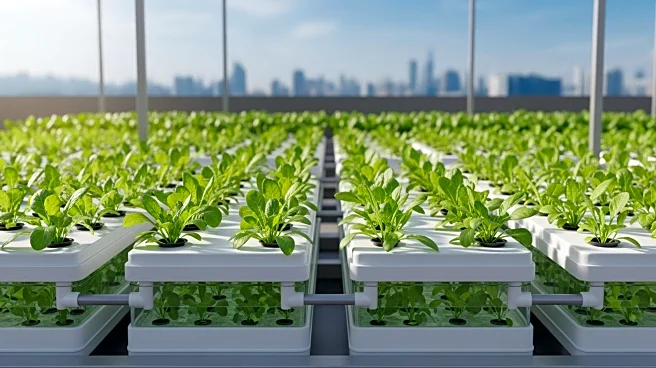
The Presidency of Nigeria, in collaboration with the UNESCO REF and the Police Officers’ Wives Association (POWA) Lagos State Chapter, has initiated a bespoke Urban Agriculture Training Programme in Lagos. This initiative, led by the Senior Special Assistant
to the President on Food Security, Yejide Ogundipe, aims to empower women farmers as key contributors to Nigeria's food security. The program, themed 'Seed of Empowerment: Growing Women in Lagos,' provides women with the necessary tools, knowledge, and opportunities to succeed in urban farming. It aligns with the National Agricultural Technology Innovation Policy and the Produce for Lagos Programme, ensuring participants a steady income every two to three weeks. The program plans to expand in 2026, targeting 120,000 women across Lagos State. The initiative is supported by various partners, including NIHORT and IAR&T, and is part of UNESCO REF's Strategic Intervention Programme.
Why It's Important?
This initiative is significant as it addresses food security and women's empowerment in Nigeria. By equipping women with agricultural skills and financial opportunities, the program aims to enhance household financial stability, which is a deterrent to crime. The initiative also supports the national food system by increasing local food production. Furthermore, it serves as a model for corporate social responsibility, encouraging investment in women's empowerment and food security. The program's expansion plans indicate a commitment to long-term sustainability and community transformation, potentially impacting thousands of families and contributing to economic growth.
What's Next?
The program is set to expand in 2026, with plans to reach 120,000 women across all local governments in Lagos State. This expansion will likely involve increased collaboration with local and international partners to ensure the program's success and sustainability. As the initiative grows, it may attract more corporate partners interested in supporting women's empowerment and food security. The program's success could also inspire similar initiatives in other states, further strengthening Nigeria's agricultural sector and empowering more women nationwide.
Beyond the Headlines
The initiative highlights the importance of capacity building over charity, emphasizing long-term empowerment and financial independence for women. By providing practical training and resources, the program ensures that participants can immediately apply their skills, fostering a culture of self-reliance and entrepreneurship. This approach not only benefits the participants but also contributes to the broader goal of sustainable development and poverty reduction in Nigeria. Additionally, the program's focus on generational empowerment, through educational opportunities for participants' children, underscores its potential to create lasting change in communities.