

What's Happening?
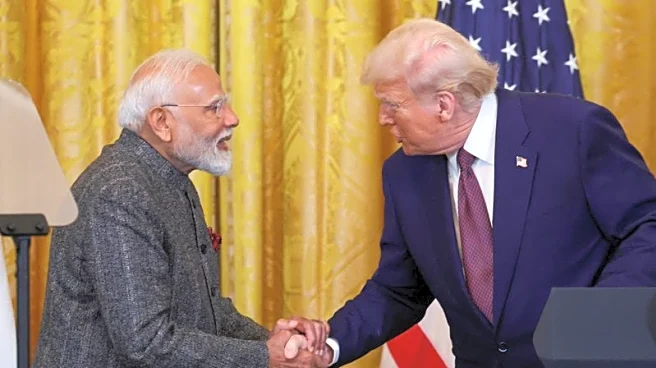
India is actively diversifying its export markets in response to high U.S. tariffs imposed by President Trump. The country has recently signed a free trade agreement with New Zealand, following similar deals with the UK and Oman. Despite the U.S. being
India's largest export market, accounting for 18% of its exports, India is seeking to reduce its reliance on the U.S. by expanding trade with other countries. This strategic shift comes as India remains firm against opening sensitive sectors to U.S. products, while the prospects for a bilateral trade agreement with the U.S. remain uncertain.
Why It's Important?
India's move to diversify its export markets highlights the broader impact of U.S. trade policies on global trade dynamics. By reducing dependence on the U.S., India aims to mitigate the risks associated with trade uncertainties and protect its economic interests. This strategy could influence other countries facing similar tariff pressures to explore alternative markets, potentially reshaping global trade patterns. The shift also underscores the challenges of negotiating trade agreements under protectionist policies, affecting industries reliant on international trade.
What's Next?
India is expected to continue pursuing free trade agreements with other countries to further diversify its export destinations. This approach may lead to increased trade partnerships and economic collaboration beyond traditional markets. The ongoing trade tensions with the U.S. could prompt India to strengthen its economic ties with other regions, potentially impacting global trade flows. Businesses and industries involved in international trade will need to adapt to these changes, while policymakers will monitor the effects on economic growth and stability.