







What's Happening?
Hamilton County Public Health has announced that a sewage discharge from a damaged treatment plant in Connersville, Indiana, is contaminating the Whitewater River and parts of the Great Miami River, rendering them unsafe for recreational activities. The
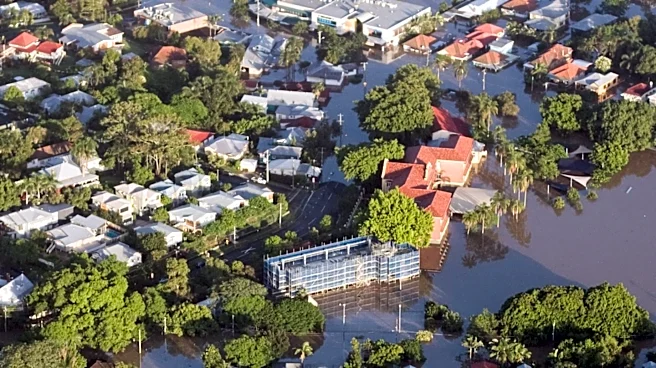
health department issued a recommendation for the public to temporarily avoid contact with these rivers, particularly the Whitewater River and the Great Miami River south of their confluence, as a precautionary measure. The issue was brought to the attention of Hamilton County Public Health via an August 19 alert from the Ohio River Valley Water Sanitation Commission (ORSANCO). Connersville Mayor Chad Frank confirmed that the wastewater treatment plant suffered severe damage due to historic flooding in the city the previous week. Engineers and contractors are working to repair the facility, which is currently offline, and are still pumping water out of its sub-basement. An unknown quantity of untreated, raw sewage is actively being released into the Whitewater River from the plant, located approximately 50 miles northwest of Hamilton County.
Why It's Important?
This wastewater discharge poses significant public health and environmental risks to communities along the Whitewater and Great Miami Rivers in the U.S. The presence of untreated sewage can lead to increased levels of coliforms, E. coli, and other harmful bacteria, which can cause gastrointestinal illnesses if ingested and skin infections upon contact. This directly impacts recreational activities such as swimming, canoeing, and kayaking, which are popular in these waterways, leading to economic losses for local businesses dependent on river tourism. Furthermore, the contamination could affect aquatic ecosystems, potentially harming fish and other wildlife. The incident highlights the vulnerability of critical infrastructure, like wastewater treatment plants, to extreme weather events and the cascading effects such damage can have on public health and environmental quality across state lines. The long-term ecological recovery of the rivers will depend on the duration and extent of the discharge and the effectiveness of remediation efforts.
What's Next?
Engineers and contractors are continuing to work around the clock to repair the damaged wastewater treatment plant in Connersville, Indiana. The immediate priority is to get the facility back online and stop the discharge of untreated sewage into the Whitewater River. Hamilton County Public Health will likely continue to monitor water quality in the affected rivers and update the public on safety recommendations. The Ohio River Valley Water Sanitation Commission (ORSANCO) will also remain involved in tracking the situation. Once the plant is operational, there will be a need for extensive environmental monitoring and potential cleanup efforts to assess and mitigate the ecological impact. Local authorities may also consider implementing measures to enhance the resilience of critical infrastructure against future flooding events, potentially involving federal assistance for infrastructure upgrades and disaster preparedness.
Beyond the Headlines
This incident underscores the broader challenge of aging infrastructure and its susceptibility to the increasing frequency and intensity of extreme weather events, a growing concern across the U.S. The contamination of the Whitewater and Great Miami Rivers highlights the interconnectedness of environmental systems and the potential for localized infrastructure failures to have widespread regional impacts. It also brings to light the importance of inter-agency and interstate cooperation in managing environmental crises, as the sewage originates in Indiana but affects Ohio waterways. The event could spark discussions on funding for infrastructure improvements, particularly in wastewater management, to prevent similar occurrences. Furthermore, it emphasizes the need for robust public health communication strategies during environmental emergencies to ensure residents are well-informed and can take necessary precautions to protect their health and safety.