





What's Happening?
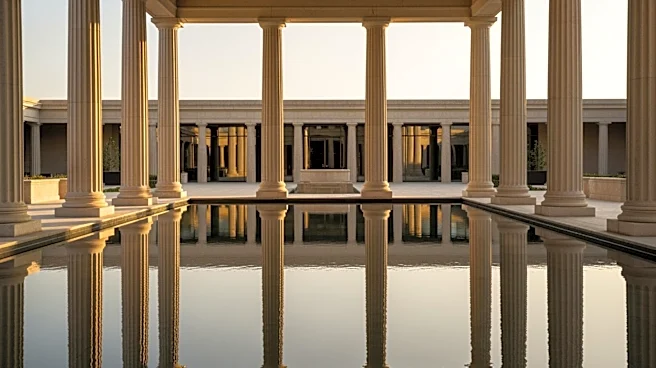
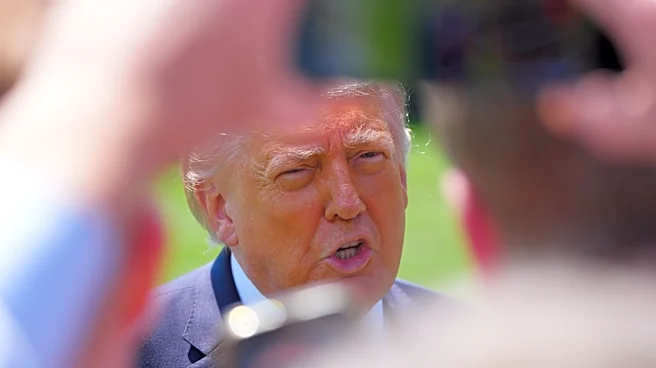
President Donald Trump recently shared an AI-generated image on Truth Social, depicting himself shirtless alongside a scantily clad woman and several members of his Cabinet. The image, which portrays a surreal pool party at the Lincoln Memorial Reflecting
Pool, includes Vice President JD Vance, Secretary of State Marco Rubio, and Interior Secretary Doug Burgum, all appearing shirtless and smiling next to Trump. The post was made late at night, following an event in The Villages, Florida. The image shows Trump as significantly younger and thinner, seated on a gold inflatable chair, while the others float nearby. This post was part of a series of 11 posts made by Trump in a 41-minute span, which also included a photo of himself at Mount Rushmore, appearing as the fifth face on the monument. The AI image was shared without a caption, shortly after the real-life Lincoln Memorial Reflecting Pool was vandalized with a message targeting Trump.
Why It's Important?
The late-night posting spree by President Trump, including the AI-generated image, highlights his continued use of social media to engage with the public in unconventional ways. This behavior underscores the ongoing influence of digital platforms in political communication, where traditional media narratives can be bypassed. The image, which presents a fantastical version of reality, raises questions about the use of AI in political imagery and the potential for such content to shape public perception. The incident also reflects the broader trend of political figures using social media to maintain visibility and control over their public image, especially in the context of upcoming elections or political challenges. The vandalism at the Lincoln Memorial Reflecting Pool further illustrates the contentious political climate and the polarizing effect of Trump's presidency.
What's Next?
The release of the AI-generated image and the subsequent media attention may prompt discussions about the ethical implications of using AI in political imagery. It could lead to increased scrutiny of how digital tools are employed in political campaigns and the potential for misinformation. Political opponents and analysts may use this incident to critique Trump's approach to communication and governance. Additionally, the vandalism at the Lincoln Memorial Reflecting Pool may result in heightened security measures and investigations to prevent similar acts. As Trump continues to engage with his base through social media, his actions may influence the strategies of other political figures in leveraging digital platforms for public engagement.