






What's Happening?
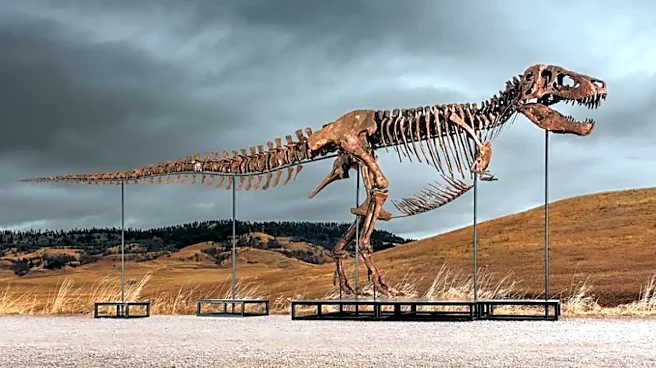
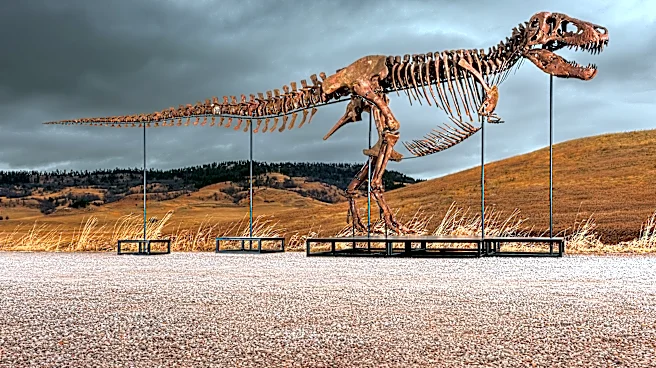
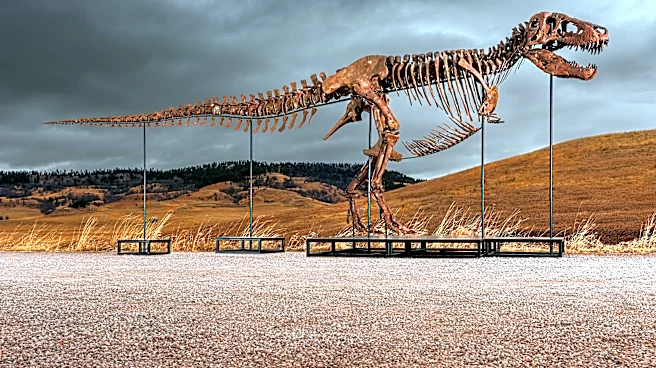
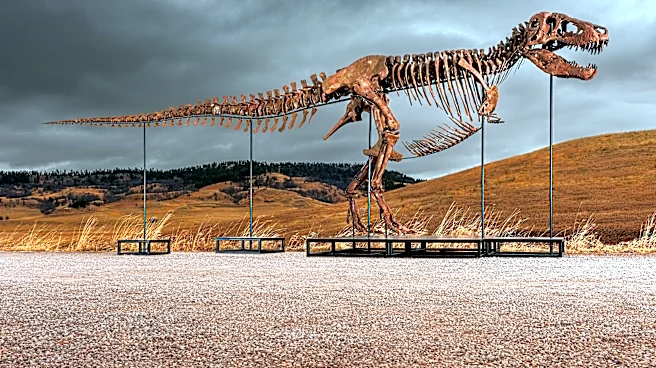
A fossilized Tyrannosaurus rex skeleton, known as 'Gus', was sold for a record $50.1 million at Sotheby’s New York. This auction marked a significant event as Gus is one of the largest and most complete T-Rex fossils ever discovered. The 67-million-year-old
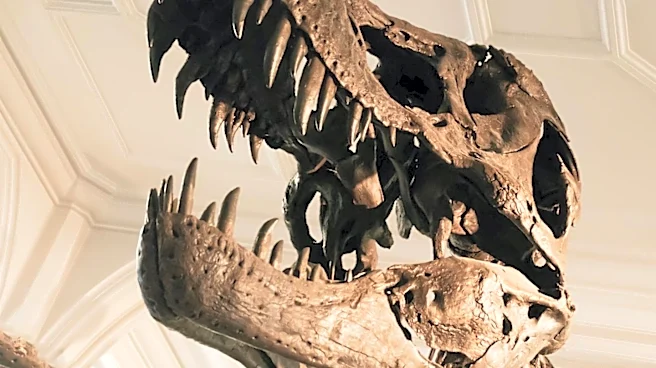
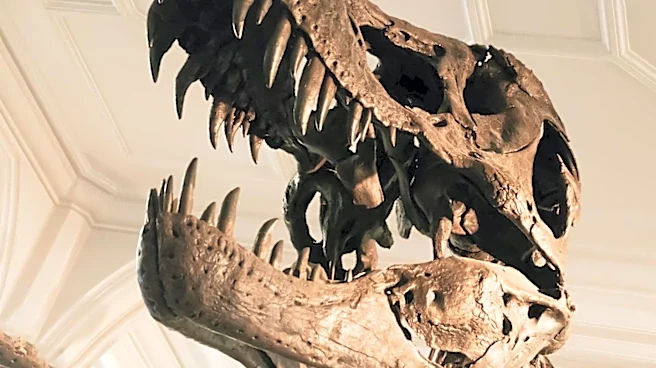
skeleton was sold to an anonymous phone bidder after a competitive bidding process that lasted approximately ten minutes. The auctioneer emphasized the rarity of the opportunity to own such a specimen, which is mounted on a steel armature in a predatory pose. Gus's remains were excavated over three years at a cattle ranch in South Dakota and are 61% complete by bone count. The fossil was displayed at Sotheby’s Breuer Building, with its formidable skull showcased separately due to its fragility.
Why It's Important?
The sale of Gus the T-Rex highlights the growing market for dinosaur fossils, which are increasingly being sold at high prices, often beyond the reach of museums. This trend raises concerns among scientists and paleontologists, as private ownership of such specimens can limit access for research and study. The sale underscores the tension between private collectors and the scientific community, with the latter emphasizing the importance of keeping significant fossils in public institutions for educational and research purposes. The record-breaking sale also reflects the broader interest and value placed on natural history artifacts, which continue to captivate collectors and the public alike.
What's Next?
The sale of Gus may prompt further discussions about the ethics and implications of selling significant paleontological finds to private collectors. Museums and scientific institutions might need to explore new strategies to secure funding for acquiring such specimens to ensure they remain accessible for research. Additionally, the high-profile nature of this sale could inspire more private collectors to enter the market, potentially driving up prices even further. The scientific community may advocate for policies that encourage or mandate the sharing of privately owned fossils for research purposes.
Beyond the Headlines
The sale of Gus the T-Rex raises broader questions about the commercialization of natural history and its impact on scientific research. As prices for fossils continue to rise, there is a risk that important specimens could be lost to private collections, limiting their availability for study and public education. This trend could lead to a reevaluation of how fossils are valued and traded, potentially prompting calls for regulatory changes to protect scientific interests. The ethical considerations surrounding the sale of such artifacts may also influence future auctions and the policies of auction houses.