







What's Happening?
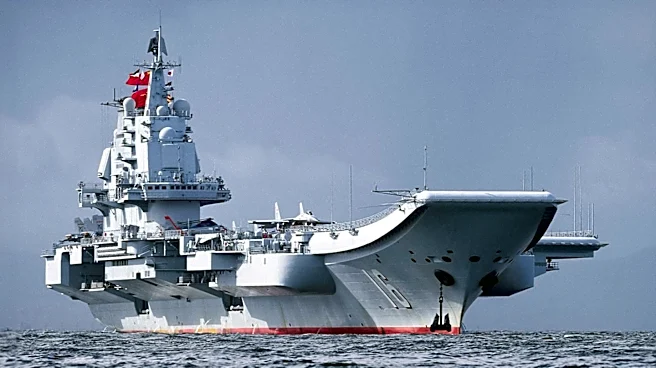
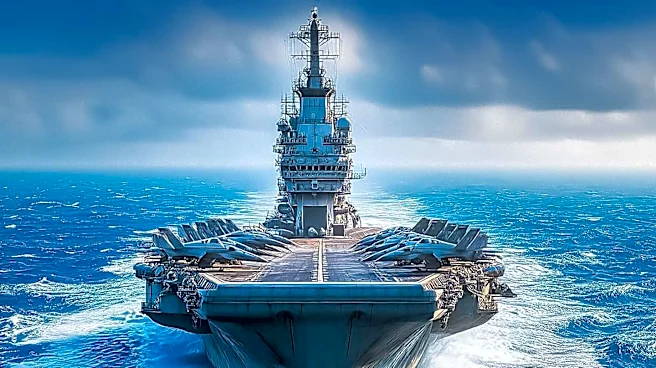
One year after its entry into service on November 5, 2025, the Chinese Navy's aircraft carrier Fujian (CV-18) is progressing through its training cycle, system validation, and sea operations. The Fujian is the third aircraft carrier in the Chinese fleet,
joining the Liaoning (CV-16) and the Shandong (CV-17). Unlike its predecessors, which use a STOBAR (short takeoff using a ramp and recovery with arresting cables) system, the Fujian incorporates EMALS electromagnetic catapults, marking a significant technological advancement for China's naval aviation. This allows for the launch of aircraft with greater fuel and weapons loads and the integration of heavier platforms like early warning aircraft. The ship has conducted live-fire training, launch and recovery cycles, formation sailing, and coordinated search and rescue exercises. Satellite images from September 2026 showed full-scale mock-ups of J-15 and J-35 fighters on the flight deck, indicating ongoing crew training for aircraft handling and positioning.
Why It's Important?
The Fujian's development is crucial for the Chinese Navy as it aims to achieve full operational capability, a goal Chinese official media set for 2026. The integration of electromagnetic catapults represents a paradigm shift, providing China with a carrier-based operational architecture closer to that of leading navies operating CATOBAR aircraft carriers. This technological leap enhances the capabilities of China's naval aviation, allowing for more effective power projection and a qualitatively different air wing with new J-35 fighters, J-15Ts, and KJ-600s. The successful operationalization of the Fujian would significantly bolster China's naval power, potentially altering the balance of power in the Pacific and South China Sea. This advancement could influence regional security dynamics and the strategic considerations of other naval powers, including the United States, in the Indo-Pacific.
What's Next?
The primary challenge for the Chinese Navy is to transition the Fujian to full operational capability. This involves demonstrating the carrier's ability to operate with its complete air wing, sustain continuous takeoff and recovery cycles, and conduct training in distant waters under demanding operational conditions. The integration of new aircraft types, such as the J-35 fighters, J-15Ts, and KJ-600s, into the carrier's air wing will also be a key focus. The ongoing validation of procedures, launch and recovery systems, resupply, and coordination among different aircraft are essential steps. The progress of the Fujian will be closely monitored by international observers, as its full operational status will signify a new era for the People's Liberation Army Navy's carrier-based aviation capabilities.
Beyond the Headlines
The Fujian's advanced capabilities, particularly its electromagnetic catapults, signify China's ambition to project naval power globally and challenge existing maritime hegemonies. This technological leap not only enhances China's military reach but also has broader implications for naval doctrine and strategy worldwide. The ability to launch heavier aircraft with more ordnance and fuel extends the operational range and effectiveness of carrier-based air power, potentially influencing future naval engagements and international relations. The development also highlights China's growing indigenous defense industry capabilities and its commitment to becoming a leading maritime power. The long-term shift could lead to increased naval competition and a re-evaluation of strategic alliances and defense spending by other nations in response to China's evolving naval strength.