




What's Happening?
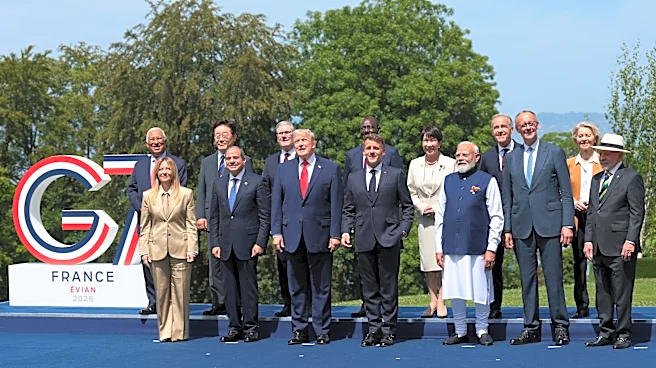
The G7 foreign ministers' meeting, originally scheduled for November 9-10, 2026, in Marseille, has been abruptly relocated to Paris. The French Ministry for Europe and Foreign Affairs cited "logistical and operational reasons" for the change. This decision
was communicated to delegations and accredited journalists on Wednesday evening. The ministry explained that the dense schedule, which includes both the G7 summit and the Paris Peace Forum, requires a significant concentration of personnel, material resources, security measures, and logistical support. Moving the meeting to Paris is intended to ensure the proper conduct of both events and guarantee the personal presence of French Foreign Minister Jean-Noel Barrot, who holds the current G7 presidency and is required to participate in both gatherings. The meeting will include the seven permanent G7 members—Germany, Canada, the United States, France, Italy, Japan, and the United Kingdom—along with foreign ministers from six partner countries: Saudi Arabia, Egypt, South Korea, Kenya, Brazil, and Ukraine.
Why It's Important?
The sudden relocation of a high-profile international meeting like the G7 foreign ministers' gathering can have several implications. For the United States, as a permanent G7 member, this change impacts logistical planning for its delegation and potentially alters the dynamics of discussions. While the official reason is logistical, an alternative explanation circulating in diplomatic circles suggests security concerns regarding potential social unrest in France and risks to participants. If true, this highlights the broader challenges of ensuring security for international events in an increasingly volatile global environment. The G7 meetings are crucial for coordinating policy among leading industrial nations on various global issues, including economic stability, security, and international cooperation. Any disruption or perceived instability surrounding these meetings could affect the perception of global leadership and collaborative efforts.
What's Next?
The G7 foreign ministers' meeting will proceed in Paris as scheduled for November 9-10, 2026. Delegations, including that of the United States, will need to adjust their logistical arrangements to accommodate the new venue. The French Ministry for Europe and Foreign Affairs will likely continue to emphasize the logistical rationale for the move, while diplomatic circles may continue to speculate on underlying security concerns. The outcomes of the G7 discussions, particularly regarding global challenges and international cooperation, will be closely watched. The simultaneous hosting of the Paris Peace Forum alongside the G7 summit underscores France's commitment to multilateralism and addressing complex global issues, potentially leading to coordinated announcements or initiatives from both events.
Beyond the Headlines
The relocation, even if officially for logistical reasons, subtly underscores the growing complexities and potential vulnerabilities associated with hosting major international events. The unconfirmed rumors of security concerns, if they hold any truth, point to a broader trend where geopolitical tensions and domestic unrest can influence the practicalities of international diplomacy. This could lead to a re-evaluation of venue selection criteria for future high-level gatherings, prioritizing stability and security over traditional or symbolic locations. For the U.S. and other participating nations, it highlights the need for adaptable diplomatic strategies and robust security protocols in an unpredictable global landscape. The incident also reflects the intricate balance host nations must maintain between showcasing their capabilities and ensuring the safety and smooth operation of critical international dialogues.