



What's Happening?
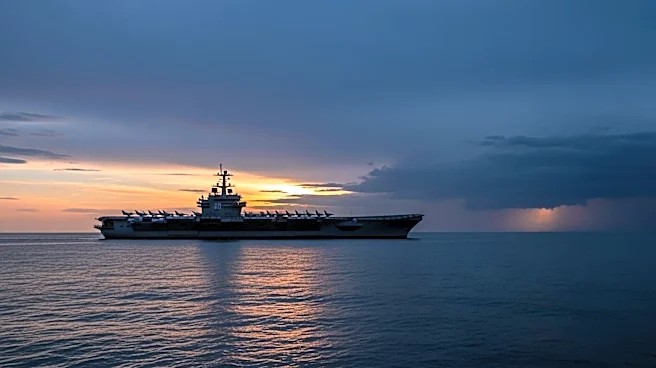
The United States is increasing its military presence in the Middle East by deploying a third aircraft carrier strike group. The USS George H.W. Bush, a Nimitz-class aircraft carrier, has departed from Naval Station Norfolk in Virginia, accompanied by its warships.
This deployment is part of a broader strategy as President Trump considers additional military options concerning Iran. The USS Abraham Lincoln is currently in the Arabian Sea, while the USS Gerald R. Ford is undergoing repairs in Croatia. The deployment of these carriers signifies a significant boost in U.S. naval presence in the region, highlighting ongoing military readiness amid escalating tensions.
Why It's Important?
The deployment of a third aircraft carrier to the Middle East underscores the U.S.'s strategic focus on the region, particularly in light of rising tensions with Iran. This move could have significant implications for regional stability and U.S. foreign policy. The increased military presence serves as a deterrent against potential Iranian aggression and signals the U.S.'s commitment to maintaining security in the area. It also reflects the broader geopolitical dynamics, where military readiness is crucial in managing international relations and conflicts. The presence of these carriers could influence diplomatic negotiations and impact global oil markets, given the region's critical role in energy production.
What's Next?
The expanded U.S. naval presence in the Middle East is likely to remain for the foreseeable future, although specific operational plans have not been disclosed by the Navy. This deployment could lead to heightened military activities and further strategic maneuvers in the region. The international community, including allies and adversaries, will closely monitor these developments. Potential reactions from Iran and other regional players could shape future diplomatic and military engagements. The situation may also prompt discussions within the U.S. government regarding long-term military strategies and resource allocation in the Middle East.