







What's Happening?
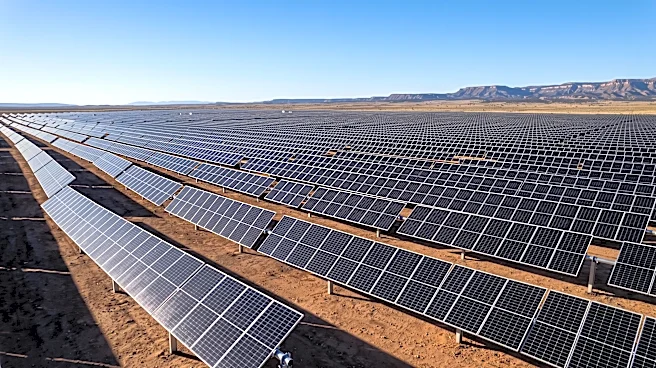
Ørsted has commenced construction on its Blackwater Solar project, a 200 MW facility located in Roosevelt County, New Mexico. This marks Ørsted's inaugural development in the state. The project is designed to generate sufficient electricity to power over
56,000 homes annually within the Southwest Power Pool region. Commercial operations are anticipated to begin in late 2027. In addition to power generation, Ørsted is contributing $100,000 towards the restoration of an 8.8-acre playa near Melrose, New Mexico, a type of seasonal wetland crucial for local wildlife and water resources. The company also projects that Blackwater Solar will contribute nearly $18 million in property tax revenue to Roosevelt County over its operational lifespan, which will support local schools, infrastructure, first responders, and other public services. The solar panels for the project are being sourced from First Solar, incorporating domestic manufacturing into the supply chain.
Why It's Important?
This project is significant for New Mexico's energy landscape and the broader U.S. renewable energy sector. It represents a substantial increase in utility-scale solar generation within the Southwest Power Pool, addressing rising industrial electricity demand in the region. The integration of domestically manufactured solar panels from First Solar highlights a growing trend towards strengthening the U.S. renewable energy supply chain, potentially fostering job creation and economic stability within the country. Furthermore, the projected $18 million in property tax revenue will provide a significant boost to Roosevelt County's public services, demonstrating the economic benefits that large-scale renewable energy projects can bring to local communities. The environmental commitment to wetland restoration also sets a precedent for integrating ecological conservation with energy development, showcasing a more holistic approach to sustainable infrastructure.
What's Next?
The Blackwater Solar project is slated to achieve commercial operations in late 2027. This timeline will be a critical test for Ørsted to demonstrate its ability to deliver its first New Mexico project on schedule and meet the long-term electricity demand outlined in its power purchase agreement. The successful completion and operation of this project will also provide an early indication of how Ørsted effectively combines large-scale solar development with local environmental commitments in the state. Over the project's operating life, stakeholders will be observing whether the promised generation capacity, tax contributions, and conservation benefits are fully realized. The project's performance could influence future renewable energy investments and development strategies in New Mexico and other states with similar energy demands and environmental considerations.
Beyond the Headlines
The Blackwater Solar project extends beyond mere electricity generation by integrating significant local economic and environmental benefits. The substantial property tax contributions underscore a model where renewable energy developments can directly fund community services, potentially alleviating pressure on local budgets and fostering greater public acceptance of such projects. The partnership with Playa Lakes Joint Venture for wetland restoration highlights a growing emphasis on biodiversity and water resource management within large-scale infrastructure projects. This approach suggests a shift towards more comprehensive sustainability frameworks that consider ecological impacts alongside energy production. The use of domestic manufacturing for solar panels also points to a broader national strategy to build resilience and self-sufficiency in critical industries, reducing reliance on international supply chains and potentially creating a more robust domestic green economy.