




What's Happening?
Researchers at Texas A&M University are initiating the third and final phase of a multiyear study to evaluate the effectiveness of far-UVC light in reducing airborne pathogens, including highly pathogenic avian influenza (HPAI), within commercial poultry
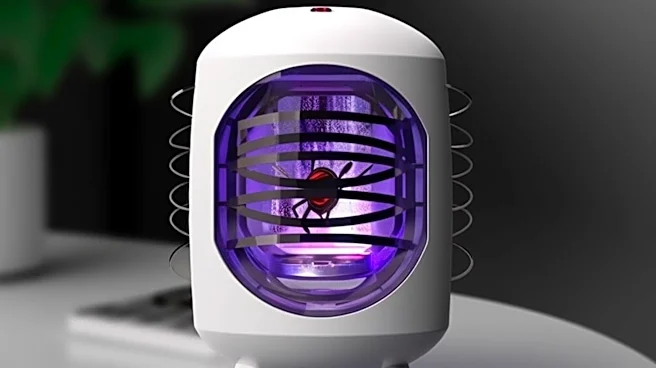
houses. This research, led by Morgan Farnell and Ziteng “Tim” Xu from the Texas A&M Department of Poultry Science, aims to determine if far-UVC light can inactivate viruses and bacteria without harming birds. The current HPAI outbreak, which began around 2022, has significantly impacted U.S. poultry farms, leading to the culling of millions of birds and a surge in egg prices in early 2025. Unlike conventional germicidal UV light, far-UVC light is designed to be safe for use in occupied spaces. The project is supported by a $2 million grant from the U.S. Department of Agriculture Animal and Plant Health Inspection Service.
Why It's Important?
The ongoing HPAI outbreak poses a substantial threat to the U.S. poultry industry, causing significant economic losses and impacting food supply chains. The development of new tools to combat avian influenza is crucial, especially as the industry has moved away from antibiotic use and faces challenges with traditional vaccination methods for broilers. If successful, far-UVC light technology could offer a novel and safe method for pathogen control in poultry houses, potentially reducing bird mortality, improving animal welfare, and stabilizing egg and poultry meat prices. This innovation could also lessen the financial burden on farmers and contribute to the overall resilience of the agricultural sector against future disease outbreaks. The ability to safely disinfect occupied spaces could have broader implications for other livestock operations and even human environments.
What's Next?
The Texas A&M research team will conduct a two-year study involving four flocks, with trials under both summer and winter conditions at the Barbara J. Huffman and William M. “Bill” Huffman ’53 Poultry Science Farm Complex. Researchers will use air-sampling equipment to measure indicator organisms and monitor the impact of far-UVC light on bird behavior, circadian rhythms, and growth performance using AI-assisted camera tracking. Ziteng “Tim” Xu will focus on the engineering challenges of deploying the technology, including how dust might affect its efficacy. The team is also designing an integrated disinfection system combining far-UVC air treatment with UVC-enabled positive-pressure ventilation and robotic floor-disinfection modules. If proven effective, this technology could eventually be applied to swine and dairy operations, expanding its impact beyond poultry.
Beyond the Headlines
The exploration of far-UVC light represents a significant shift in biosecurity strategies for the agricultural industry. Its potential to inactivate pathogens in occupied spaces without harming animals or humans addresses a critical need for proactive disease prevention rather than reactive containment. This technology could lead to a paradigm shift in how livestock facilities manage health risks, moving towards continuous environmental disinfection. Furthermore, the success of this research could pave the way for broader adoption of far-UVC technology in other public and commercial settings, such as hospitals, schools, and restaurants, offering a new layer of protection against airborne infectious diseases. The ethical implications of using advanced light technology for animal welfare and food safety are also noteworthy, highlighting a growing intersection between technological innovation and agricultural practices.