

What's Happening?
Humanitarian photographer Steven Wade Adams's images, taken in remote Nuer villages along the Ethiopia–South Sudan border in 2016, have unexpectedly become a vital link to the past for a family of a 'Lost Boy of Sudan.' Peter, who fled his village at
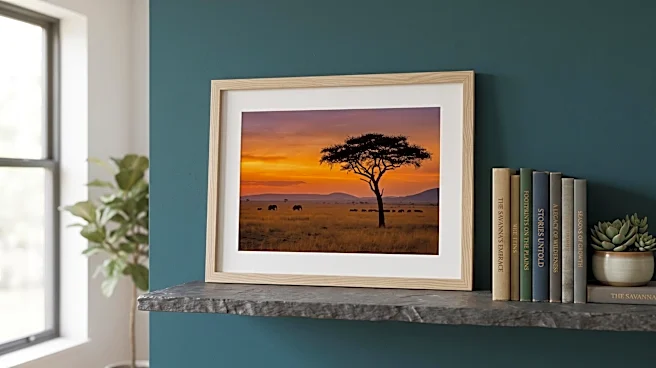
age three and later became a U.S. citizen and Peace Corps Volunteer, had almost no physical reminders of his childhood. Former Peace Corps Director Carrie Hessler-Radelet purchased one of Adams's prints, a young Nuer girl at sunset, as a gift for Peter and his wife, Anna Lena. This single photograph initiated a collaboration where Adams helped the family select images capturing the village life Peter remembered. These photographs now adorn their home, serving as a tangible legacy for their children. The story highlights the profound impact of human connection and service, reaching across continents and decades, and underscores the resilience of individuals displaced by conflict.
Why It's Important?
This story underscores the profound human impact of the Peace Corps' broader mission, extending beyond direct service to foster cultural preservation and personal healing. For individuals like Peter, who experienced extreme displacement and loss, these photographs offer an invaluable connection to their heritage, which is crucial for identity formation and intergenerational understanding. The collaboration between a humanitarian photographer and a former Peace Corps Director demonstrates how diverse forms of service and artistic expression can converge to address deep-seated human needs. It also highlights the enduring legacy of the 'Lost Boys of Sudan,' a group whose resilience and journey to the U.S. represent a significant chapter in American immigration and humanitarian efforts. The photographs not only provide a personal link to the past but also serve as a powerful reminder of the ongoing challenges of displacement and the importance of cultural memory.
What's Next?
The ongoing impact of these photographs will likely continue to resonate within Peter's family, strengthening their cultural legacy and providing a visual narrative for future generations. The story may also inspire further collaborations between artists, humanitarian organizations, and individuals seeking to reconnect with their past. For the Peace Corps community, this narrative reinforces the value of their work in fostering global connections and supporting individuals through various forms of aid and cultural exchange. It could also encourage more initiatives that leverage art and documentation to support displaced communities in preserving their heritage. The broader conversation around the 'Lost Boys of Sudan' and similar displaced populations may gain renewed attention, emphasizing the long-term psychological and cultural needs of refugees and immigrants.
Beyond the Headlines
This narrative delves into the ethical and cultural dimensions of humanitarian photography and its role in preserving identity. Adams's initial act of documenting village life, without immediate means to share the images, evolved into a deeply personal and meaningful collaboration. It raises questions about the responsibility of photographers in conflict zones and the potential for their work to serve as a bridge for cultural memory and healing. The story also subtly touches upon the concept of 'dignity' as expressed by Peter, who stated, 'America gave me dignity' after becoming a citizen and serving in the Peace Corps. This highlights the transformative power of service and belonging for individuals who have experienced profound trauma and displacement. The photographs transcend mere art, becoming artifacts of resilience and a testament to the enduring human need for connection to one's roots.