





What's Happening?
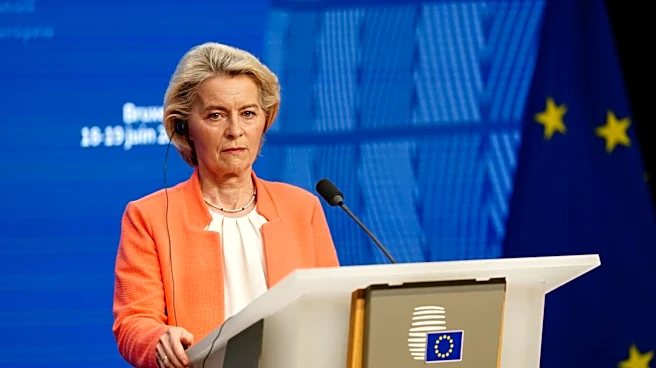
The European Union delivered a statement at a UN Security Council Arria-formula meeting, emphasizing the critical link between armed conflict and food insecurity globally. The EU condemned the weaponization of food and the use of starvation as a method
of warfare, which is prohibited under international humanitarian law. The statement highlighted that a staggering 266 million people worldwide face acute food insecurity, with conflict-induced hunger being a major concern in regions such as Afghanistan, the Democratic Republic of the Congo, Haiti, the Occupied Palestinian Territory, Somalia, South Sudan, Sudan, and Yemen. Recent escalations in the Middle East have further exposed vulnerabilities in global food systems. Additionally, Russia's intensified attacks on Ukraine's agricultural export infrastructure and the disruption of Black Sea exports are exacerbating global food insecurity. The EU called for the implementation of UNSC Resolution 2417, respect for international humanitarian law, and accountability for violators. It also stressed the importance of food diplomacy, early action based on data, and strengthening resilience in partner countries.
Why It's Important?
This statement underscores the severe humanitarian crisis unfolding globally, with millions facing acute food insecurity directly linked to ongoing conflicts and geopolitical actions. The EU's condemnation of food weaponization highlights a critical violation of international humanitarian law, signaling a need for stronger international enforcement and accountability mechanisms. The disruption of agricultural exports from key regions like Ukraine has far-reaching economic consequences, impacting global food prices and supply chains, which can disproportionately affect vulnerable nations and populations. The call for food diplomacy and early action based on data is crucial for proactive intervention and preventing further escalation of hunger crises. Strengthening resilience and local self-reliance in affected countries is vital for long-term stability and reducing dependency on emergency aid, fostering sustainable development and peace.
What's Next?
The EU's statement calls for continued international efforts to implement UNSC Resolution 2417 and uphold international humanitarian law. This implies a sustained focus on diplomatic initiatives to address conflict-induced food insecurity and hold perpetrators accountable. There will likely be ongoing pressure on nations involved in conflicts to cease attacks on civilian infrastructure, particularly those related to food production and distribution, and to facilitate unimpeded humanitarian access. The emphasis on data-driven early warning systems suggests a push for enhanced monitoring and analysis of food security indicators to enable timely interventions. Furthermore, the EU and its partners are expected to continue investing in humanitarian aid, food assistance, and programs aimed at building agricultural resilience and self-reliance in affected regions, working with organizations like the WFP, FAO, and UNICEF.
Beyond the Headlines
The EU's strong stance against the weaponization of food points to a broader concern about the erosion of international norms and humanitarian principles in modern conflicts. This development could lead to increased scrutiny of state actors who use food as a tool of war, potentially paving the way for more robust legal frameworks or sanctions. The interconnectedness of global food systems means that disruptions in one region, such as the Black Sea, have ripple effects worldwide, highlighting the fragility of global supply chains and the need for diversification and resilience. The call for food diplomacy also suggests a shift towards integrating food security more explicitly into peace and security dialogues, recognizing it not just as a humanitarian issue but as a fundamental component of global stability and conflict prevention. This could foster new approaches to international cooperation and conflict resolution that prioritize food access and agricultural stability.