




What's Happening?
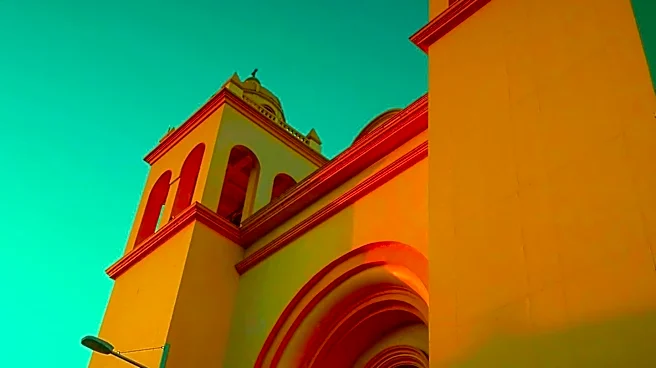
The Holy Trinity Cathedral (Agia Triada) in Piraeus, Greece, stands as a significant Greek Orthodox church, serving as the cathedral for the city's diocese. Its history is marked by destruction and rebirth. Originally constructed in 1839 following Greek independence,
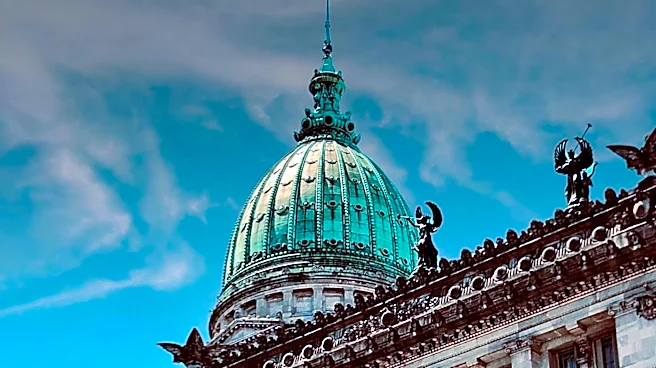
the church was completely destroyed on January 11, 1944, during an Allied bombing of the port of Piraeus in World War II, resulting in the loss of many lives who had sought refuge within its walls. Reconstruction efforts began with the laying of the foundation stone on June 17, 1956. The church was inaugurated in 1964 and fully completed in 1979. Architecturally, it is a masterpiece of Byzantine style, covering 835 square meters and capable of accommodating 3,100 people. It features a three-aisled design, with the nave dedicated to the Holy Trinity, the right wing to the Apostles Peter and Paul, and the left wing to Saint Spyridon. The massive dome, supported by 8 arches and featuring 40 windows, allows natural light to illuminate the 'Christ Pantocrator' fresco. The interior is adorned with gold mosaic frescoes, blending Macedonian and Cretan styles, created by painter Stephanos Almaliotis and his students. The church also preserves a section of the ruins of the 'Long Walls' of Athens within the Chapel of Saints Cyril and Methodius.
Why It's Important?
The Holy Trinity Cathedral's story is a powerful testament to resilience and cultural preservation in the face of conflict. Its destruction during World War II and subsequent meticulous reconstruction highlight the enduring spirit of the community and its commitment to faith and heritage. The church's architectural and artistic significance, with its grand scale, Byzantine design, and intricate frescoes, makes it a vital cultural landmark. It serves as a living museum of religious art and history, attracting visitors and scholars interested in Byzantine aesthetics and Orthodox traditions. The preservation of ancient ruins within its chapels further connects the present-day structure to a deeper historical narrative, offering insights into the continuous layers of Greek civilization. For the local community, it is not just a place of worship but a symbol of identity and continuity, embodying the collective memory of past struggles and triumphs. Its presence contributes significantly to the cultural and spiritual landscape of Piraeus, reinforcing the city's historical depth and artistic legacy.
What's Next?
The Holy Trinity Cathedral will continue to serve as a central hub for the Greek Orthodox community in Piraeus, hosting religious services and community events. Its status as a significant historical and architectural site suggests ongoing efforts for its maintenance and preservation to ensure its longevity for future generations. Educational initiatives may be developed to highlight its turbulent history and artistic value, potentially attracting more tourists and researchers. The church's location next to the Piraeus Municipal Theatre and its guarding by naval and army honor guards indicate its continued prominence in the city's public life. Future plans might include further restoration projects for its frescoes or structural elements, ensuring the integrity of its Byzantine artistry. The church will likely remain a key destination for those seeking to understand the intersection of faith, history, and art in Greece, drawing visitors who appreciate its majestic exterior and profound historical significance, even if they cannot always access the interior.
Beyond the Headlines
Beyond its immediate religious and historical functions, the Holy Trinity Cathedral embodies a deeper narrative about the impact of war on cultural heritage and the subsequent efforts to rebuild and reclaim identity. The destruction of the original church during the Allied bombing underscores the collateral damage of conflict on civilian life and cultural assets. Its reconstruction, spanning decades, reflects a profound societal commitment to healing and renewal. The blend of Macedonian and Cretan styles in its frescoes speaks to the rich tapestry of influences that have shaped Greek art and culture over centuries. The inclusion of a section of the 'Long Walls' of Athens within the church subtly links the modern structure to the ancient foundations of Greek civilization, emphasizing a continuous historical thread. This integration of ancient and modern elements highlights a cultural reverence for the past while embracing the present. The church serves as a powerful reminder that cultural institutions are not merely buildings but repositories of collective memory, resilience, and artistic expression, continually evolving while honoring their roots.