






What's Happening?
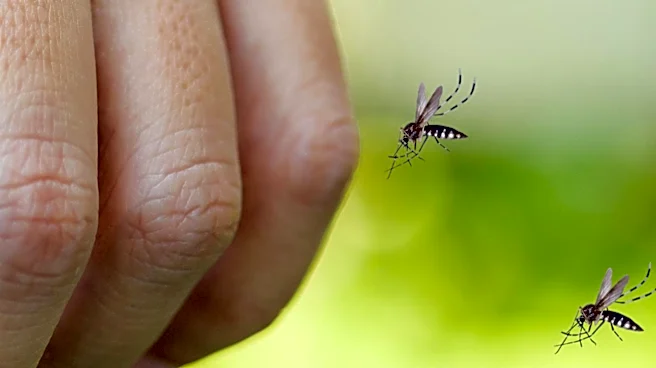
In an effort to control mosquito populations, approximately 600,000 male mosquitoes infected with the Wolbachia bacteria are being released across Washington DC. These mosquitoes do not bite humans, and the bacteria they carry prevent any eggs produced
after mating from hatching. This initiative is led by Bee Safe Mosquito Control, marking the first time a private company in the U.S. offers this pest control method directly to residents. Historically, such efforts were managed by local government mosquito control districts or public health agencies. The method is gaining traction, with Alphabet, Google's parent company, seeking approval to release millions of these mosquitoes in California and Florida. The initiative comes amid growing concerns about mosquito-borne diseases, exacerbated by climate change, which creates favorable conditions for mosquito survival and reproduction.
Why It's Important?
The release of Wolbachia-infected mosquitoes represents a significant shift in pest control strategies, potentially reducing the spread of mosquito-borne diseases such as Zika, dengue, and chikungunya. As climate change continues to alter environmental conditions, the risk of these diseases spreading increases, posing a public health challenge. This method offers a sustainable and environmentally friendly alternative to chemical pesticides, which can have harmful ecological impacts. The success of this initiative could lead to broader adoption across the U.S., influencing public health policies and pest control practices. It also highlights the role of private companies in addressing public health issues, potentially leading to new business opportunities in the pest control industry.
What's Next?
If successful, the initiative could pave the way for similar projects in other regions, particularly those vulnerable to mosquito-borne diseases. The approval sought by Alphabet for large-scale releases in California and Florida indicates potential expansion. Public health agencies and local governments may consider integrating this method into their mosquito control programs. Monitoring and evaluation of the project's impact on mosquito populations and disease transmission rates will be crucial. Stakeholders, including environmental groups and public health officials, will likely scrutinize the outcomes to assess the method's efficacy and safety.