








What's Happening?
The global energy markets are experiencing significant disruptions due to geopolitical tensions, particularly around the Strait of Hormuz, a critical shipping route for global oil supply. The current situation is reminiscent of past disruptions, with
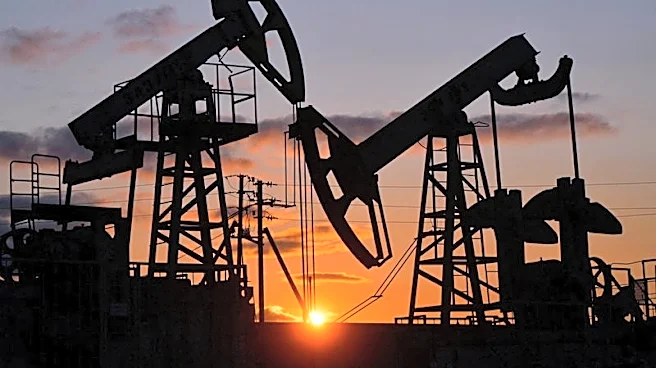
oil flows tightening and shipping through the Strait remaining constrained. This has led to increased risks in energy supply chains, causing immediate price shocks and logistical challenges. The disruption is not only affecting shipping lanes but also involves recent attacks on Saudi energy infrastructure, which have cut production and constrained pipeline capacity. This has limited the kingdom's ability to reroute crude away from the Strait of Hormuz, putting pressure on both primary and alternative supply routes. Meanwhile, Russia has forecasted an increase in its oil output, signaling confidence in maintaining supply despite ongoing geopolitical pressures.
Why It's Important?
The disruption in the Strait of Hormuz is a stress test for the global energy system, highlighting how quickly tight markets can become unstable when a single chokepoint is compromised. This situation has significant economic implications, as it affects global oil prices and supply chains. Import-dependent economies, such as Japan, are already responding by releasing additional oil from strategic reserves to stabilize markets. The disruption is driving a widening gap between spot and futures pricing, indicating immediate shortages rather than long-term scarcity. This scenario underscores the importance of logistics, timing, and refinery configurations in managing energy supply. The ongoing tensions and supply constraints could lead to increased volatility in energy markets, affecting industries and economies worldwide.
What's Next?
Governments and producers are actively responding to the disruptions, but the system is operating with limited margin for error. Diplomatic efforts, including U.S.-Iran talks, are being closely watched as potential solutions to ease tensions and restore normalcy in shipping activities. However, the physical reality remains strained, with limited shipping activity and cautious insurers. As the situation evolves, stakeholders will need to navigate the complexities of logistics and geopolitical influences to stabilize the energy markets. The outcome of these efforts will be crucial in determining the future stability of global energy supply chains.