







What's Happening?
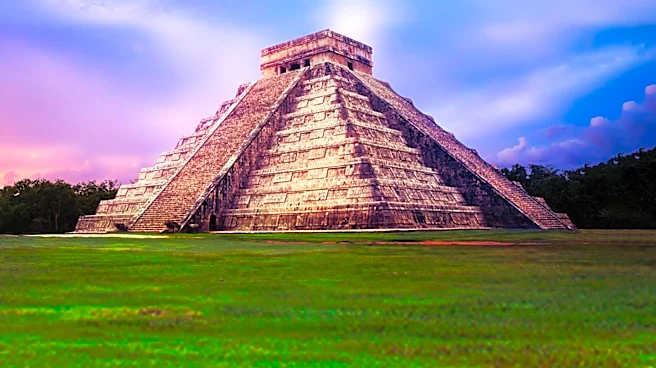
A recent study published in PLOS One has revealed that ancient Maya communities in southeastern Petén, Guatemala, heavily relied on maize as a staple food source. The research utilized stable isotope analysis on human remains from smaller Maya settlements
to uncover dietary patterns. The findings indicate that, similar to major Maya centers, these communities consumed a diet rich in maize, supplemented by other plants and animals. The study highlights regional variations in diet, with some areas incorporating more animal protein from local freshwater resources. The research provides new insights into the subsistence strategies of non-elite Maya populations.
Why It's Important?
The study's findings are crucial for understanding the daily lives and survival strategies of ancient Maya communities, particularly those outside the major urban centers. By focusing on smaller settlements, the research sheds light on the diversity of Maya subsistence practices and their adaptability to local ecological conditions. This knowledge contributes to a more comprehensive understanding of Maya civilization and its resilience in the face of environmental and social changes. The study also emphasizes the importance of maize in Maya culture, both as a nutritional staple and a cultural symbol, highlighting its role in sustaining communities through periods of instability.