
What's Happening?
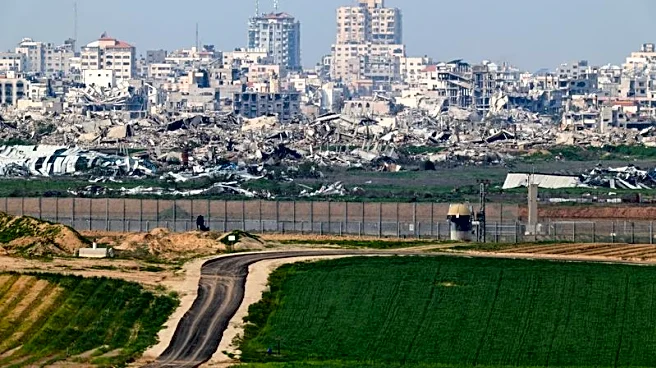
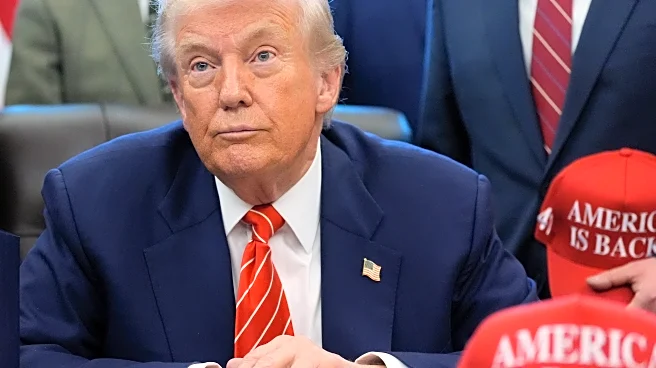
President Donald Trump has initiated a 'Board of Peace' aimed at overseeing the next steps in Gaza, inviting global leaders to join. Membership on this board requires a $1 billion contribution for a permanent seat, while a three-year appointment requires no
contribution. The funds are intended for Gaza's reconstruction. Countries such as Hungary, India, Jordan, Greece, Cyprus, and Pakistan have received invitations, with more expected to be announced during the World Economic Forum in Davos. The board will manage the ceasefire's second phase, including disarmament of Hamas and international security deployment. This initiative could rival the United Nations Security Council, which has faced U.S. vetoes on Gaza actions.
Why It's Important?
The creation of the 'Board of Peace' signifies a shift in global conflict resolution dynamics, potentially challenging the United Nations' role. By requiring substantial financial contributions for permanent membership, the board could influence international relations and power structures. The initiative reflects Trump's approach to foreign policy, emphasizing financial investment in peace processes. The board's actions in Gaza, particularly regarding Hamas disarmament and reconstruction, could impact regional stability and international diplomatic efforts. The involvement of diverse countries highlights the global interest in resolving the Gaza conflict and the potential for new alliances.
What's Next?
The U.S. is expected to announce the official list of board members soon, likely at the World Economic Forum. The board's activities in Gaza will be closely watched, particularly its effectiveness in implementing the ceasefire's second phase. The initiative may face challenges, including coordination with Israel and potential opposition from countries excluded from the board. The board's success or failure could influence future international peace efforts and the role of financial contributions in global diplomacy. Observers will be monitoring the board's impact on the United Nations' authority and the broader geopolitical landscape.