
What's Happening?
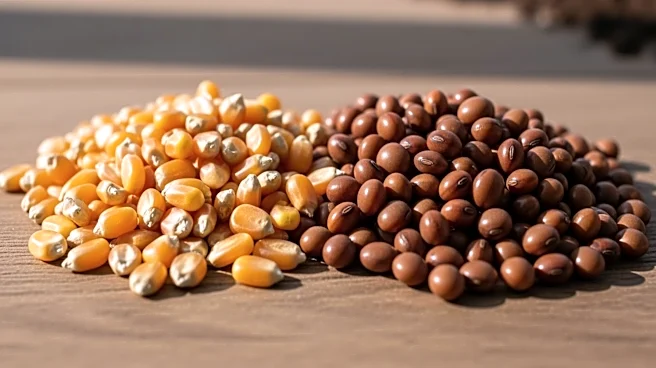
The USDA National Agricultural Statistics Service has released its Prospective Plantings report for 2026, indicating a shift in U.S. crop planting trends. Farmers plan to plant 95.3 million acres of corn,
a 3% decrease from 2025, with significant reductions in key Corn Belt states such as Illinois, Iowa, and Minnesota. Conversely, soybean planting is expected to rise by 4% to 84.7 million acres, with notable increases in states like Arkansas and Wisconsin. This shift reflects changing profitability and input cost considerations. Additionally, wheat acreage is projected to decline by 3%, while cotton planting is set to increase by 4%. The report also highlights an 11% increase in corn stocks and a 10% rise in soybean stocks as of March 1.
Why It's Important?
The changes in crop planting intentions for 2026 have significant implications for U.S. agriculture and the broader economy. The reduction in corn acreage could impact the supply chain for corn-based products and biofuels, potentially affecting prices and availability. The increase in soybean planting suggests a response to market demand and profitability, which could influence global trade dynamics, especially with major soybean importers. The decline in wheat acreage may affect domestic supply and export potential, while the rise in cotton planting indicates a renewed interest in fiber markets. These shifts reflect broader economic trends and farmer responses to market conditions, input costs, and profitability.
What's Next?
As planting progresses, stakeholders will closely monitor weather conditions and market responses. The USDA's subsequent reports will provide updates on planting progress and crop conditions, influencing market expectations and pricing. Farmers may adjust their plans based on evolving conditions, and policymakers could respond with support measures if adverse conditions arise. The agricultural sector will also watch for international trade developments, as changes in U.S. crop production can affect global markets. Additionally, the impact of these planting decisions on rural economies and supply chains will be a focus for industry analysts.