








What's Happening?
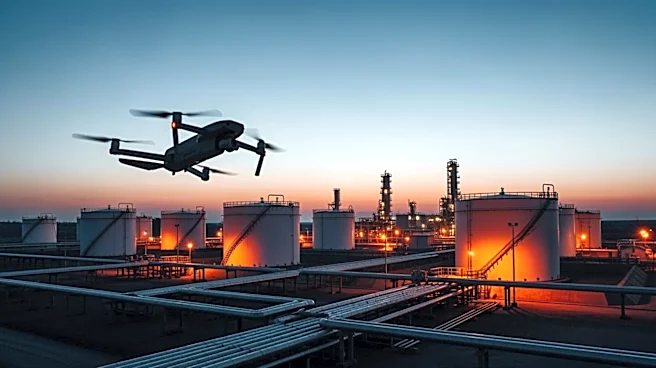
Drones operated by the Special Operations Center 'A' of the Security Service of Ukraine (SSU) have caused a significant fire at the Samara line-production dispatch station in Prosvet, Samara region, Russia. This facility is crucial for blending high-
and low-sulfur crude oil to produce the Urals export grade, a key component of Russia's oil transportation infrastructure. The attack damaged five tanks, each with a capacity of 20,000 cubic meters of crude oil. This strike is part of a broader Ukrainian effort to disrupt Russian oil exports, which are vital for funding Russia's military operations against Ukraine.
Why It's Important?
The attack on the Samara oil terminal is significant as it directly impacts Russia's ability to export oil, thereby affecting its revenue streams. This disruption could lead to logistical challenges, increased storage costs, and potential supply chain issues for Russia. The reduction in oil revenue may limit Russia's financial capacity to sustain its military activities in Ukraine. This development highlights the strategic use of targeted strikes by Ukraine to weaken Russia's economic and military capabilities.
What's Next?
The ongoing conflict suggests that Ukraine may continue to target key Russian infrastructure to further strain its resources. Russia might respond by increasing security measures around critical facilities or retaliating with military actions. The international community, particularly countries dependent on Russian oil, may need to seek alternative sources to mitigate potential supply disruptions.