
What's Happening?
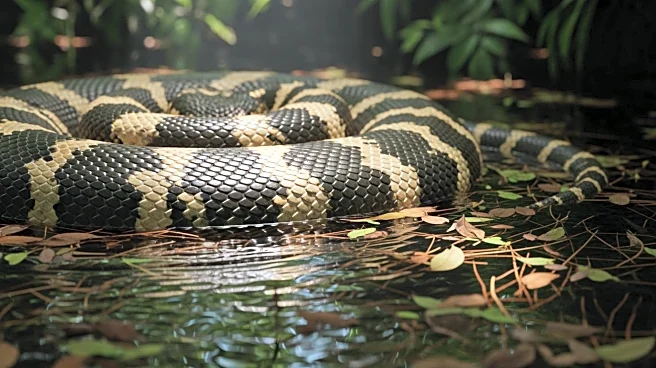
A new study involving the Northern Green Anaconda, featured in the National Geographic series 'Pole to Pole with Will Smith,' highlights the snake's role in alerting public health officials to food contamination.
The research, led by Bryan Fry, a toxicologist at the University of Queensland, reveals that the anaconda's distinct feeding patterns can serve as an early warning system for wildlife contaminated by toxic materials like lead and cadmium. The study identifies two distinct species within the Northern Green Anaconda, with males showing higher bioaccumulation of pollutants due to their diet of fish, turtles, and frogs. This finding is significant for local populations relying on wildlife for food, as it helps them avoid consuming contaminated animals.
Why It's Important?
The study underscores the importance of understanding wildlife feeding patterns in managing food safety and public health. By using the anaconda as a sentinel species, researchers can better predict and mitigate the risks of consuming contaminated wildlife, particularly in regions where local populations depend on these animals for sustenance. This research also highlights the broader implications of environmental pollution on food systems, emphasizing the need for effective ecosystem management to protect public health. The findings could influence policy decisions regarding environmental protection and food safety regulations, potentially leading to stricter controls on pollutants that affect wildlife and, consequently, human health.