




What's Happening?
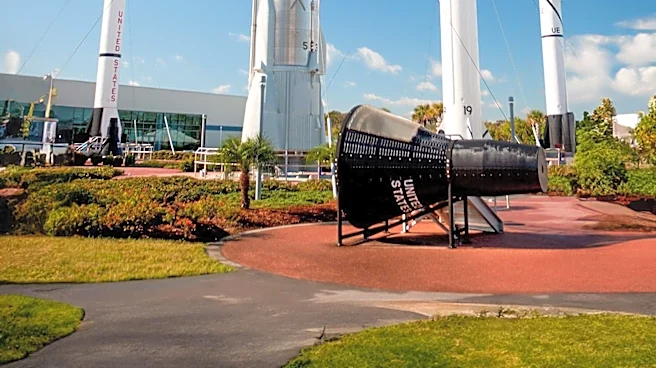
An Ohio space museum, the Armstrong Air & Space Museum in Wapakoneta, features the actual Gemini VIII capsule, which was flown by Neil Armstrong and David Scott on March 16, 1966. This mission achieved the first successful docking of two vehicles in space.
Despite an early return due to a malfunction, the capsule is a central exhibit, displaying its cramped interior and scorch marks from re-entry. The museum also houses a genuine piece of the Moon, a sizable chunk of vesicular basalt brought back by Armstrong and Buzz Aldrin during Apollo 11. Additionally, the museum displays Armstrong's Gemini suit, an Apollo suit, and various artifacts from the space race, including a focus on the Soviet program and Ohio astronauts.
Why It's Important?
This museum serves as a vital educational and historical resource for the U.S., preserving critical artifacts from the early days of space exploration. The Gemini VIII capsule, flown by Neil Armstrong and David Scott, represents a pivotal moment in the space race—the first successful orbital docking—which was essential for future lunar missions. The presence of a Moon rock directly connects visitors to the Apollo 11 mission, a monumental achievement for the U.S. and humanity. By showcasing these items, the museum inspires future generations in STEM fields, highlights American ingenuity and courage, and provides context for the significant scientific and technological advancements made during the space age. It also underscores Ohio's contribution to space exploration, being the home state of many astronauts.
What's Next?
The Armstrong Air & Space Museum will continue to serve as a destination for space enthusiasts and educational groups, preserving the legacy of U.S. space exploration. The museum's interactive exhibits and educational programs, including hands-on STEM activities, will likely continue to engage visitors of all ages. As space exploration advances, the museum may incorporate new exhibits or update existing ones to reflect ongoing developments in space technology and missions. The continued preservation of artifacts like the Gemini VIII capsule and the Moon rock ensures that future generations can connect directly with these historical achievements, fostering a deeper understanding of the challenges and triumphs of space travel. The museum's role in inspiring young minds to pursue careers in science and engineering remains crucial for the nation's technological future.
Beyond the Headlines
The museum's collection, particularly the Gemini VIII capsule and the Moon rock, transcends mere historical display; it embodies humanity's relentless pursuit of the unknown and the profound impact of scientific endeavor. The cramped capsule evokes the immense bravery and resilience of astronauts like Armstrong and Scott, challenging visitors to contemplate the physical and psychological demands of early spaceflight. The Moon rock, an ordinary-looking piece of basalt, becomes a tangible link to an extraordinary achievement, prompting reflection on our place in the cosmos and the potential for discovery beyond Earth. The museum's focus on both American and Soviet contributions to the space race also offers a nuanced perspective on a period often viewed through a purely nationalistic lens, highlighting the shared human drive for exploration despite geopolitical rivalries. This fosters a deeper appreciation for the collective human spirit of innovation.