



What's Happening?
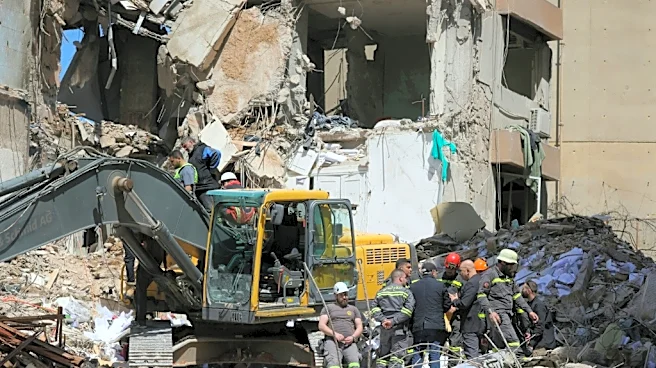
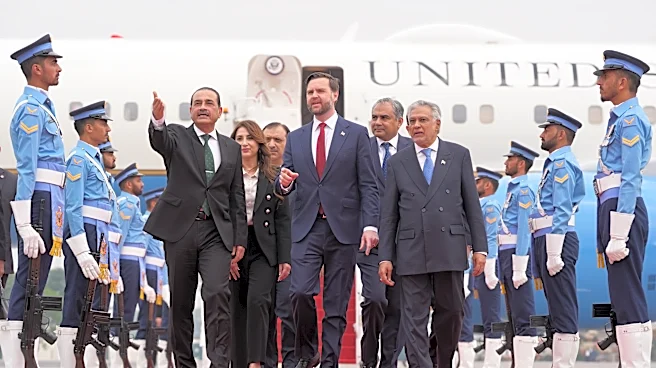
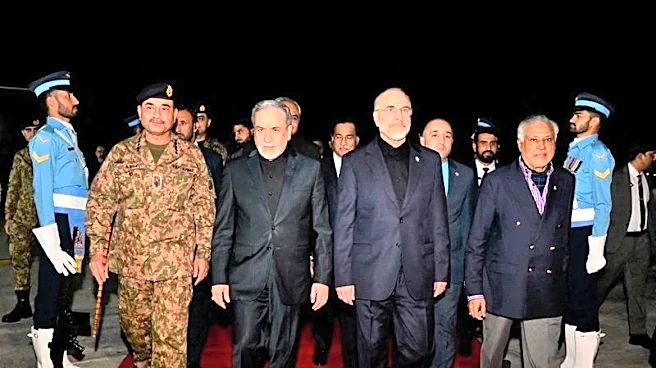
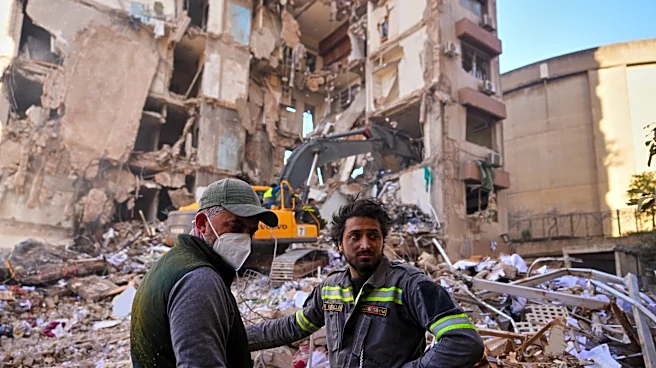
Negotiations between Israel and Lebanon are set to begin, with Israel's ambassador to the United States, Yechiel Leiter, and Lebanon's ambassador to Washington, Nada Hamadeh Moawad, scheduled to discuss terms for formal talks. These discussions are expected
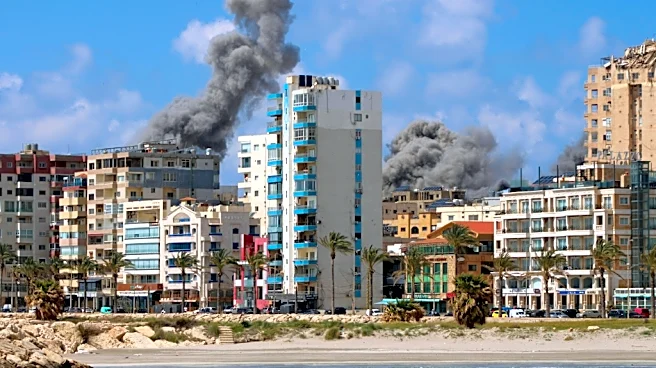
to include a U.S. representative, possibly the U.S. ambassador to Beirut. Lebanese officials are reportedly seeking a temporary ceasefire as a goodwill gesture to initiate the negotiations. The talks aim to address the disarmament of Hezbollah and establish peaceful relations between Israel and Lebanon. Prime Minister Benjamin Netanyahu announced the decision to engage in direct negotiations following pressure from President Trump, who advocated for a more restrained approach. Despite hopes for diplomatic and military success in disarming Hezbollah, the Israeli Defense Forces have acknowledged the challenges of achieving this goal solely through military means.
Why It's Important?
The negotiations between Israel and Lebanon hold significant implications for regional stability and security. The potential disarmament of Hezbollah, a major armed group in Lebanon, could alter the balance of power in the region and reduce tensions between the two countries. The involvement of the United States as a guarantor in the talks underscores the international interest in resolving the conflict and ensuring a lasting peace. Successful negotiations could lead to improved diplomatic relations and economic opportunities for both nations. However, the challenges in disarming Hezbollah, given its substantial military capabilities, remain a critical obstacle. The outcome of these talks could influence U.S. foreign policy in the Middle East and impact the strategic alliances within the region.
What's Next?
As the negotiations proceed, the focus will be on reaching an agreement that addresses the disarmament of Hezbollah and establishes peaceful relations between Israel and Lebanon. The role of the United States as a guarantor will be crucial in facilitating the talks and ensuring compliance with any agreements reached. The Lebanese government may continue to seek international support to strengthen its position against Hezbollah. Meanwhile, Israel may explore diplomatic and military strategies to achieve its objectives. The success of these negotiations could lead to further diplomatic engagements and potentially reshape the geopolitical landscape in the Middle East.
Beyond the Headlines
The negotiations highlight the complex dynamics between Israel, Lebanon, and Hezbollah, reflecting broader regional tensions involving Iran and other stakeholders. The Lebanese government's efforts to curb Hezbollah's influence and expel Iranian operatives indicate a shift in its approach to internal security and foreign relations. The talks also raise questions about the effectiveness of international diplomacy in resolving long-standing conflicts and the role of external powers in shaping regional outcomes. The potential for a ceasefire and disarmament agreement could set a precedent for future negotiations in the region, influencing the strategies of other countries facing similar challenges.