


What's Happening?
Methane hydrate, a form of ice containing methane gas, is found beneath the ocean floor and Arctic permafrost. Known as 'fire ice' due to its ability to ignite when pressure drops, it holds vast amounts of methane, potentially twice the carbon content
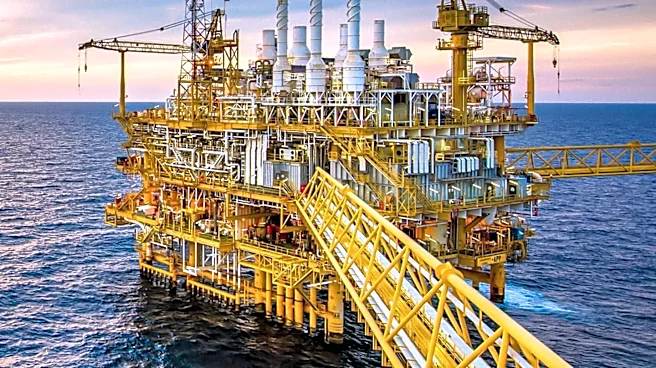
of all other fossil fuels combined. Despite its abundance, extracting methane hydrate economically and safely remains a challenge. The deposits are located in deep ocean sediments, making them difficult to access. While some production is possible in permafrost areas, large-scale commercial exploitation is currently unfeasible.
Why It's Important?
Methane hydrate represents a significant untapped energy resource that could potentially alter the global energy landscape. However, the technical and economic challenges of extraction mean it remains largely inaccessible. Additionally, methane is a potent greenhouse gas, and its release from destabilized hydrates due to warming oceans could exacerbate climate change. Understanding and managing these deposits is crucial for both energy security and environmental protection. The potential impact on global energy markets and climate policies makes methane hydrate a critical area of study.
Beyond the Headlines
The presence of methane hydrate highlights the complex relationship between resource abundance and accessibility. While it offers a potential energy source, the environmental risks and extraction challenges underscore the need for careful management. The situation mirrors other planetary bodies, like Saturn's moon Titan, where methane is abundant but inaccessible. This comparison emphasizes the broader theme of resource management and technological innovation in addressing energy needs while mitigating environmental impacts.