






What's Happening?
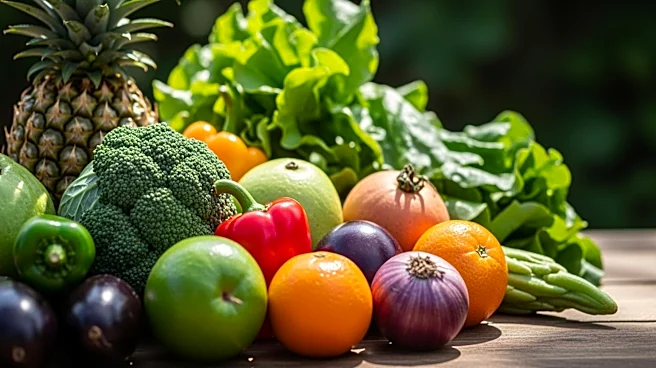
The Hawaiʻi Department of Education (DOE) is actively working to increase its local food sourcing, aiming to meet a state-mandated goal of purchasing 30% of its food from local sources by 2030. Despite previous challenges, the DOE has made progress by implementing
small and medium-sized purchase contracts with local farmers. This approach allows the department to diversify its food procurement and support local agriculture. Recent efforts include pilot programs that integrate locally sourced ingredients into school menus, such as ʻulu flour and kalo. The DOE's new leadership, including Food Administrator Anneliese Tanner and Assistant Superintendent Sean Tajima, has been instrumental in driving these changes, with local food purchasing currently at around 8%.
Why It's Important?
The initiative to source more food locally is significant for Hawaiʻi's economy and sustainability efforts. By supporting local farmers, the DOE is helping to strengthen the agricultural sector, which can lead to increased production capacity and economic growth. This move also aligns with broader environmental goals by reducing the carbon footprint associated with importing food. Additionally, providing students with fresh, locally sourced meals can improve nutrition and health outcomes. The success of this program could serve as a model for other states looking to enhance local food systems and support sustainable agriculture.
What's Next?
The DOE plans to continue expanding its local food procurement efforts, with the central kitchen expected to start operations in 2027, further accelerating local food integration. This facility will process local food products and serve students in specific complex areas, potentially increasing the percentage of local food used in school meals. The department's leadership is optimistic about meeting the 30% goal, and ongoing support from state lawmakers and food advocates will be crucial in maintaining momentum. Continued collaboration with local farmers will be essential to scale up production and meet the DOE's needs.