



What's Happening?
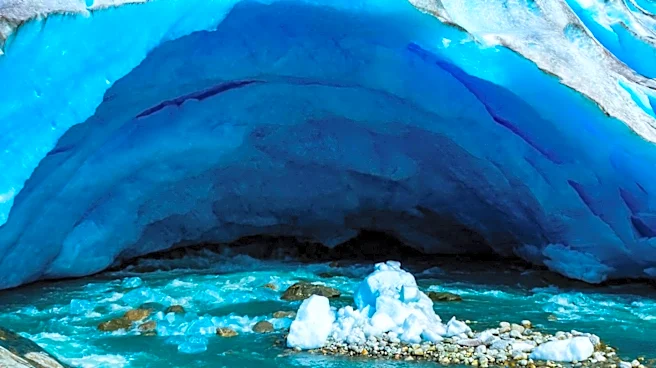
Alaska is projected to lose between 49% and 73% of its total glacial mass by the year 2100, compared to 2015 levels, according to research from the American Geophysical Union. This substantial reduction is primarily attributed to climate warming. The
study indicates that all glaciers smaller than one square kilometer in area are expected to vanish entirely by the end of the century, regardless of future climate warming scenarios. Researchers also anticipate a shift in precipitation patterns, with more rainfall instead of snow, which hinders the ability of glaciers to accumulate new ice. Furthermore, 15% to 60% of the glaciers predicted to survive until 2100 will cease adding ice, eventually leading to their disappearance. This ongoing glacial retreat has significant implications for downstream communities and ecosystems, impacting water availability and increasing hazards such as sea-level rise and flooding.
Why It's Important?
The projected loss of Alaska's glaciers carries profound implications for the region's environment, economy, and communities. Glaciers serve as crucial freshwater reservoirs, and their disappearance will reduce meltwater availability, affecting drinking water supplies, agriculture, and hydroelectric power generation in downstream areas. The increased meltwater initially contributes to sea-level rise, exacerbating coastal erosion and flooding risks for Alaskan communities and potentially impacting global sea levels. Ecologically, glacial meltwater supports unique aquatic ecosystems, and changes in water temperature and volume can disrupt these habitats, affecting fish populations and other wildlife. The tourism industry, particularly cruise lines that highlight Alaska's glaciers, will also face significant long-term impacts as these natural attractions diminish. This situation underscores the broader challenges posed by climate change and its direct effects on natural resources and human populations.
What's Next?
The continued melting of Alaskan glaciers necessitates proactive measures and adaptation strategies. Scientists will likely continue to monitor glacial retreat and refine climate models to provide more precise projections, aiding in regional planning. For communities reliant on glacial meltwater, developing alternative water management strategies, such as improved water storage and conservation, will become increasingly critical. Coastal communities will need to enhance their resilience to sea-level rise and increased flooding through infrastructure improvements and land-use planning. Policy discussions at state and federal levels may focus on climate change mitigation efforts to slow down global warming, as well as funding for adaptation projects in affected regions. The tourism sector may need to adjust its offerings as iconic glacial landscapes transform, potentially shifting focus to other natural attractions or emphasizing the urgency of climate action.
Beyond the Headlines
Beyond the immediate environmental and economic consequences, the rapid disappearance of Alaska's glaciers highlights deeper ethical and cultural dimensions. For indigenous communities in Alaska, glaciers often hold spiritual and cultural significance, and their loss represents a profound disruption to traditional ways of life and ancestral connections to the land. The issue also raises questions about intergenerational equity, as current climate policies and actions will determine the state of these natural wonders for future generations. Legally, the impacts of glacial melt on water rights and resource allocation could become more contentious, particularly in areas where water scarcity increases. The situation serves as a stark reminder of the interconnectedness of global climate systems and local ecosystems, emphasizing the need for comprehensive, long-term strategies that integrate scientific understanding with social, economic, and cultural considerations to address the multifaceted challenges of climate change.