




What's Happening?
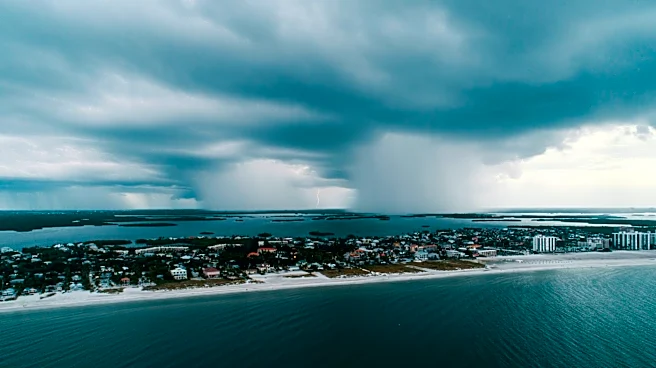
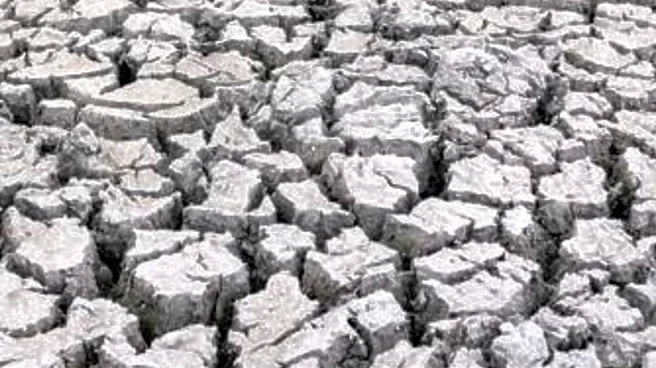
Central Florida has received some recent rainfall, offering minor relief, but significant drought conditions continue to affect the St. Johns River Water Management District. Despite recent storms during Florida’s summer rainy season, rainfall has remained
below average for much of the past year across the district. This deficit has prevented groundwater supplies and river flows from fully recovering. Clay Coarsey, the district’s director of water supply planning and assessment, noted that some of the most severe conditions are in the northern and central parts of the district. He emphasized that nearly three feet of rainfall over three months would be necessary to return drought conditions to normal levels. Orange County has fared comparatively better, with groundwater levels performing better than in counties farther north, and flows at Wekiwa Springs and Rock Springs remaining within normal ranges in July.
Why It's Important?
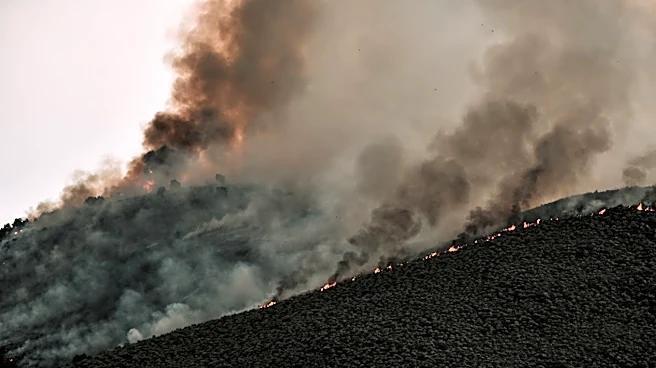
The persistence of drought conditions in Central Florida carries significant implications for the region's environment, economy, and public policy. Prolonged drought can lead to reduced water availability for agriculture, potentially impacting crop yields and increasing operational costs for farmers. It also strains public water supplies, necessitating water conservation measures that affect residents and businesses. Environmentally, low groundwater levels can harm natural ecosystems, reduce spring flows, and increase the risk of wildfires. The St. Johns River Water Management District's ongoing monitoring and calls for conservation highlight the critical need for sustainable water management practices. The disparity in conditions, with Orange County faring better, underscores the localized nature of drought impacts and the need for tailored regional responses. This situation emphasizes the delicate balance between urban development, agricultural needs, and environmental preservation in a rapidly growing state.
What's Next?
In response to the ongoing drought, residents in Central Florida are urged to continue conserving water. Clay Coarsey highlighted that about half of a typical home's water usage is for outdoor purposes, encouraging residents to properly program irrigation timers and adhere to watering restrictions. The St. Johns River Water Management District will continue to monitor rainfall, groundwater levels, river flows, and other indicators to determine when water-shortage restrictions can be modified or lifted. The challenge remains in making the largely invisible groundwater shortage apparent to residents, unlike visible low lake levels. Future actions may include enhanced public awareness campaigns to educate residents on the importance of water conservation and the long-term impacts of drought. The district will likely continue to assess and adapt its water management strategies to ensure the sustainability of water resources in the face of persistent rainfall deficits.
Beyond the Headlines
The persistent drought conditions in Central Florida reveal deeper challenges related to climate patterns, population growth, and public perception of natural resources. The difficulty in conveying the severity of an 'invisible' groundwater shortage, as noted by Clay Coarsey, highlights a significant communication hurdle for environmental agencies. This situation underscores the need for innovative public education strategies that can effectively translate complex hydrological data into actionable information for residents. Furthermore, the long-term implications of sustained drought could necessitate fundamental shifts in land use planning, agricultural practices, and urban development to ensure water security for future generations. The reliance on summer rainfall for groundwater recharge, coupled with the effects of evaporation and plant transpiration, points to the intricate balance of Florida's water cycle and the vulnerability of its natural systems to climatic variations. Addressing these challenges will require a holistic approach involving scientific research, policy adjustments, and sustained community engagement.