





What's Happening?
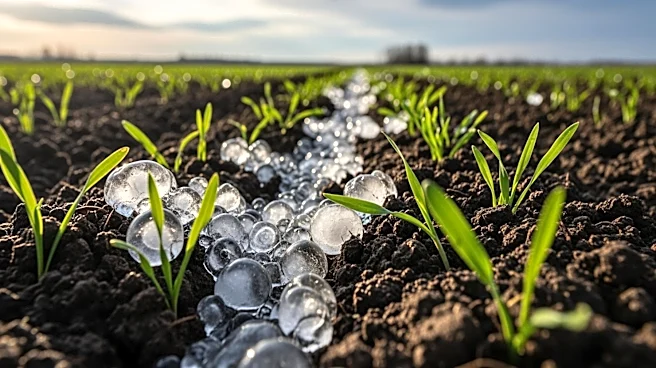
A new study indicates that as the climate warms, the risk of hailstorms is shifting toward major farming regions, including southeastern Australia, New Zealand, northern North America, and parts of Europe. Hailstorms, which can destroy crops in minutes,
are becoming more frequent in cooler regions and during winter and shoulder seasons when many crops are in the ground. The study, led by Dr. Tim Raupach from the UNSW Institute of Climate Risk and Response, highlights the challenges farmers face as hail risk increases in these areas.
Why It's Important?
The shift in hail risk poses a significant threat to agriculture, as hailstorms can cause extensive damage to crops, leading to economic losses for farmers. The findings underscore the need for adaptive strategies to protect crops and mitigate the impact of hailstorms. This includes developing resilient crop varieties and implementing protective measures. The study also highlights the broader implications of climate change on agriculture, as traditional growing regions may become less viable, and new regions may face increased risks. Policymakers and stakeholders must consider these changes in planning and resource allocation to ensure food security and economic stability.
What's Next?
Farmers, insurers, and policymakers will need to adapt to the changing hail risk by investing in protective measures and insurance schemes to mitigate potential losses. Research into resilient crop varieties and innovative farming practices will be crucial in adapting to the new climate realities. Policymakers may also need to revise agricultural policies and support systems to address the increased risk and ensure the sustainability of farming in affected regions.