
What's Happening?
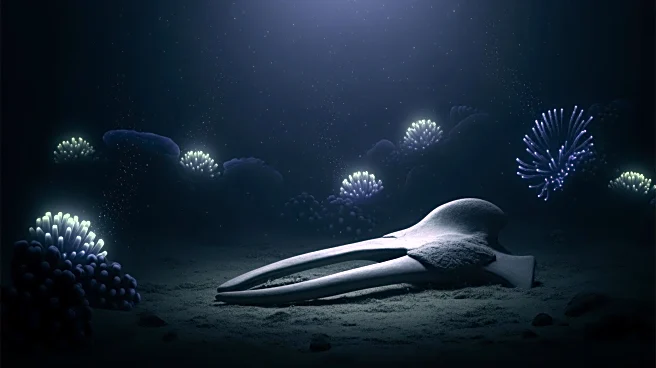
Researchers have observed a concerning absence of the zombie worm, Osedax, in a decade-long deep-sea experiment off the coast of British Columbia. Led by Fabio De Leo from Ocean Networks Canada and the University
of Victoria, the study involved placing humpback whale bones on the ocean floor to monitor colonization by these worms, which play a crucial role in breaking down whale bones and supporting deep-sea food webs. Despite extensive monitoring, no zombie worms were found, raising alarms about potential ecosystem disruptions. The absence is attributed to low oxygen levels in the study area, Barkley Canyon, which is part of a naturally low-oxygen zone. This finding suggests that expanding oxygen minimum zones in the Pacific Ocean may be affecting these ecosystems.
Why It's Important?
The absence of zombie worms could have significant implications for deep-sea ecosystems. Osedax worms are considered ecosystem engineers, facilitating nutrient recycling and creating conditions for other species to thrive. Without them, the breakdown of whale bones and subsequent nutrient release may be hindered, affecting biodiversity. The study highlights the potential impact of climate change, as expanding low-oxygen zones could disrupt these critical habitats. This could lead to a decline in species diversity and connectivity between whale fall sites, affecting the broader marine ecosystem. The findings underscore the importance of monitoring and addressing the effects of ocean warming and deoxygenation on marine life.
What's Next?
Further research is ongoing to monitor whale falls at other sites, such as NEPTUNE's Clayoquot Slope, to gather more data on the impact of low oxygen levels on deep-sea ecosystems. Scientists are also examining the effects on other ecosystem engineers, like the wood-boring Xylophaga bivalves, which show reduced colonization rates in low-oxygen environments. These studies aim to provide a clearer understanding of how climate change-induced ocean conditions are affecting marine biodiversity and ecosystem functions. The research aligns with global efforts to achieve United Nations Sustainable Development Goal 14, which focuses on conserving marine life.
Beyond the Headlines
The study raises broader concerns about the resilience of deep-sea ecosystems in the face of climate change. The potential loss of species like Osedax could have cascading effects on marine food webs and nutrient cycles. Additionally, the findings highlight the need for international collaboration in marine conservation efforts, as changes in ocean conditions can have far-reaching impacts beyond national borders. The research also emphasizes the importance of technological advancements in monitoring and studying deep-sea environments, which remain largely unexplored and vulnerable to environmental changes.