








What's Happening?
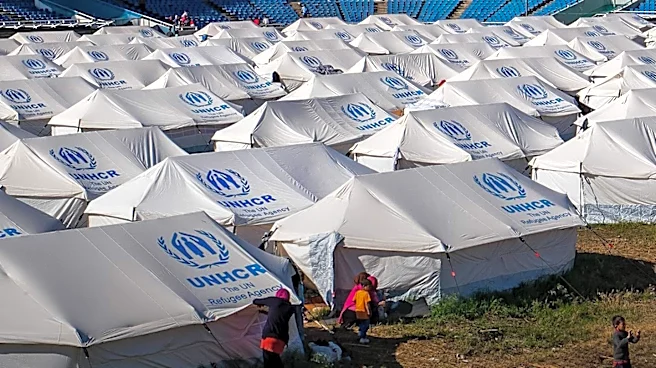
The United Nations and its humanitarian partners have increased their efforts in the Occupied Palestinian Territory following disruptions caused by Israeli military activities. Joint missions have been conducted to assess conditions in displacement sites
near Rafah and Deir al Balah, where families face insecurity and lack access to essential services. The situation is exacerbated by ongoing military operations, movement restrictions, and shortages of critical supplies, which have led to new displacements and hindered humanitarian operations. The humanitarian community is mobilizing responses to address the most pressing needs, including water, food, healthcare, and education.
Why It's Important?
The intensified humanitarian missions are crucial as they address the severe gaps in essential services for displaced families in Gaza. The ongoing military activities and movement restrictions have significantly disrupted access to food, water, and healthcare, increasing the vulnerability of affected populations. The situation poses a risk to public health and safety, highlighting the urgent need for international support and intervention. The humanitarian efforts aim to mitigate the impact of these disruptions and provide relief to thousands of families living under dire conditions.
What's Next?
Humanitarian partners are expected to continue their efforts to provide essential services and support to displaced families. The focus will be on addressing immediate needs while also planning for long-term recovery and resilience-building. The international community may need to increase funding and support to sustain these efforts and ensure that humanitarian assistance reaches those in need without interference. The situation remains volatile, and ongoing monitoring and assessment will be necessary to adapt responses to the evolving needs on the ground.