





What's Happening?
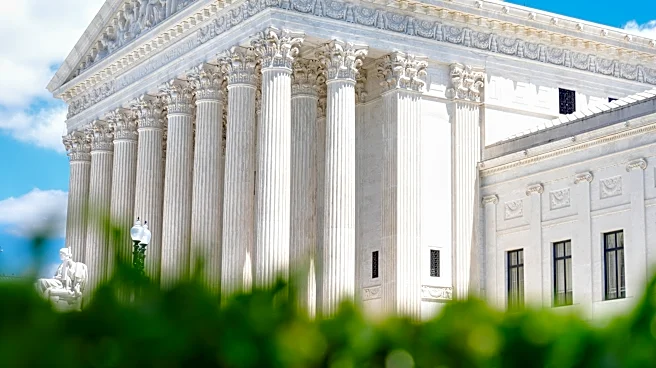
The U.S. Supreme Court has rejected a last-ditch effort by Virginia Democrats to reinstate a voter-approved congressional map that would have favored their party in the upcoming elections. The decision upholds a Virginia Supreme Court ruling that found
the map was adopted in violation of the state constitution. The ruling is part of a series of recent Supreme Court decisions that have favored Republican redistricting efforts, following a decision that weakened the Voting Rights Act. The Virginia map aimed to flip four Republican-held seats to Democrats, but the procedural errors in its adoption led to its invalidation.
Why It's Important?
This ruling is crucial as it reflects the ongoing partisan struggles over redistricting in the U.S., with significant implications for the balance of power in Congress. The decision is a setback for Democratic efforts to counter Republican redistricting gains in other states. It highlights the challenges Democrats face in navigating state and federal legal frameworks to achieve favorable electoral outcomes. The ruling also underscores the Supreme Court's current stance on redistricting, which has generally favored Republican interests, potentially affecting future electoral maps and political representation.
What's Next?
Following the Supreme Court's decision, Virginia will conduct its 2026 elections using the existing congressional map. This outcome may lead to further political and legal strategies from Democrats to address redistricting challenges. The decision could also influence redistricting efforts in other states, as parties continue to grapple with the implications of recent Supreme Court rulings on voting rights and electoral fairness. The broader impact on national politics and future elections remains to be seen, as both parties adjust their strategies in response to the evolving legal landscape.