






What's Happening?
Personal data belonging to over 40,000 employees of the U.S. Department of Homeland Security (DHS), including border and immigration agents, has been published online by a hacker. The leaked information includes names, job titles, and work contact details
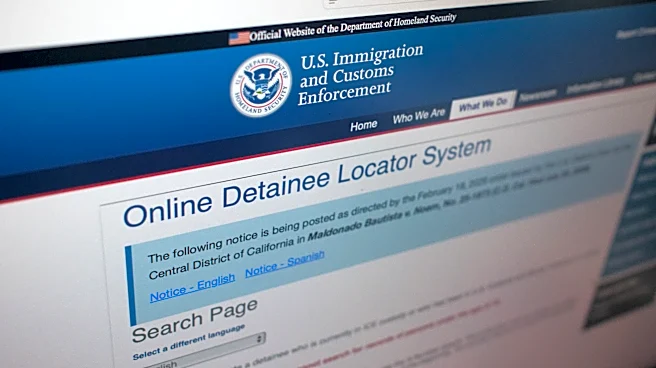
such as email addresses, phone numbers, and office locations. The hacker, who identifies as 'Department of Peace,' claims to have obtained this data from the Okta single sign-on system used by DHS. TechCrunch verified a portion of the data by cross-referencing publicly known DHS employees, indicating the data is authentic and was likely acquired around mid-August. More than half of the leaked records, approximately 21,000, belong to employees of U.S. Customs and Border Protection (CBP), with another 10,000 from U.S. Immigration and Customs Enforcement (ICE), and nearly 1,000 from the Cybersecurity and Infrastructure Security Agency (CISA). This breach affects roughly one-fifth of the total DHS workforce of about 220,000 employees. Okta has stated that its systems are secure and found no evidence of compromise.
Why It's Important?
This data breach poses significant national security and privacy concerns for the United States. The exposure of personal and work contact information for thousands of DHS employees, particularly those in sensitive roles like border and immigration enforcement, could make them targets for foreign adversaries, criminal organizations, or disgruntled individuals. This could lead to increased risks of phishing attacks, identity theft, or even physical threats against these personnel. The breach also reveals internal user groups within the DHS network, including access to tools like the Penlink web surveillance tool and the Mobile Fortify facial recognition application used by CBP and ICE agents. This information could potentially be exploited to gain further access to sensitive government systems or to compromise ongoing operations. The incident highlights vulnerabilities in government cybersecurity infrastructure and the critical need for robust protection of employee data, especially for agencies involved in national security. The fact that this is the second breach affecting DHS this year, following a previous claim by the same hacker of stealing thousands of contracts, underscores a persistent and evolving threat landscape.
What's Next?
It remains unclear whether the vulnerability exploited by the hacker has been patched or if DHS was aware of the data theft prior to its public release. A DHS spokesperson has not yet responded to requests for comment, while Okta maintains its systems are secure. The leaked data has been provided to journalist and hacker maia arson crimew, who then shared it with DDoSecrets, a non-profit collective that archives leaked data for public interest. Ryan Shapiro, Executive Director of Property of the People, believes the data could be instrumental for public information transparency researchers, aiding in investigations into alleged misconduct. Emma Best, co-founder of DDoSecrets, anticipates the exposed DHS data will serve as a 'catalyst for investigations,' empowering journalists, congressional inquiries, legal actions, community activism, and public information requests. This suggests that the fallout from this breach could extend beyond immediate security concerns, potentially leading to increased scrutiny and accountability for DHS operations and cybersecurity practices.
Beyond the Headlines
Beyond the immediate security implications, this data breach raises profound questions about the balance between government transparency and the privacy of its employees, particularly those in law enforcement and national security. The hacker's stated motivation and the subsequent distribution of the data to transparency groups suggest an intent to expose government operations and potentially hold agencies accountable. This incident could fuel public debate on the extent of government surveillance capabilities, the ethical implications of facial recognition technology, and the overall security posture of federal agencies. The revelation of internal user groups and access to specific surveillance tools could lead to calls for greater oversight and regulation of these technologies. Furthermore, the repeated targeting of DHS by the same hacker points to a potential systemic vulnerability or a determined adversary, necessitating a comprehensive review of the agency's cybersecurity defenses and incident response protocols. This event underscores the growing trend of hacktivism influencing public discourse and potentially shaping policy decisions related to digital rights and government accountability.