

What's Happening?
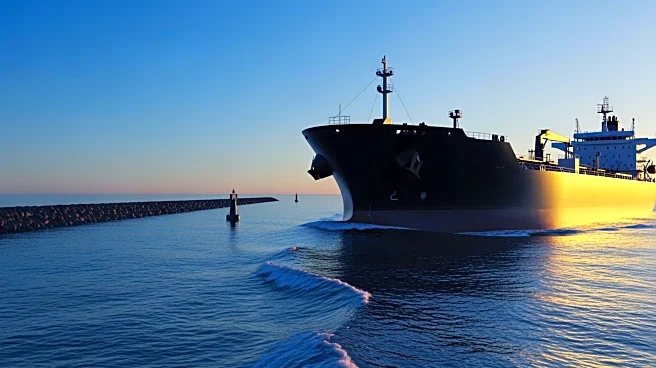
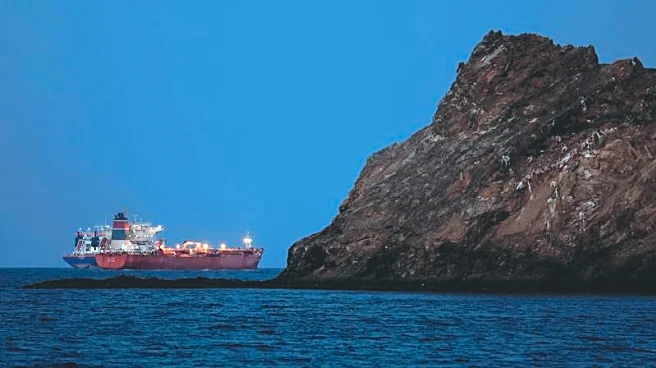
Two Indian-flagged liquefied petroleum gas (LPG) tankers, Pine Gas and Jag Vasant, successfully navigated through the Strait of Hormuz despite a general blockade of the critical waterway. This movement was confirmed by ship tracking data from the MarineTraffic
platform. The passage of these tankers comes amid a significant disruption in maritime traffic due to ongoing geopolitical tensions involving the U.S., Israel, and Iran. Hundreds of ships remain stranded in the Gulf, affecting thousands of seafarers. The Pine Gas tanker broadcast a message identifying itself as an 'India ship and crew,' highlighting the national affiliation of the vessel and its crew.
Why It's Important?
The successful passage of these tankers through the Strait of Hormuz is significant as it underscores the strategic importance of this waterway, which is a vital conduit for global energy supplies. The blockade has caused substantial delays and economic implications for the shipping industry, particularly affecting oil and gas transportation. The ability of these tankers to navigate the strait may provide a temporary relief for energy markets and highlight the resilience of maritime logistics under geopolitical stress. However, the broader impact on global shipping and energy prices remains a concern as tensions persist.
What's Next?
The ongoing blockade and geopolitical tensions suggest that further disruptions in the Strait of Hormuz could continue. Stakeholders in the shipping and energy sectors will likely monitor the situation closely, with potential diplomatic efforts to ease tensions and restore normalcy in maritime traffic. The international community may also seek to engage in dialogue to prevent further escalation and ensure the security of this critical maritime route.