





What's Happening?
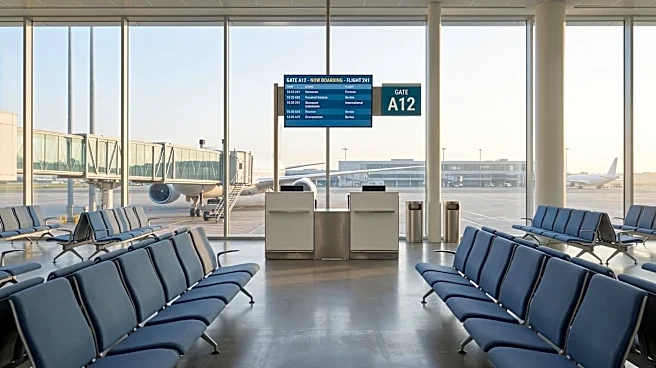
A Delta gate agent at New York's LaGuardia Airport successfully managed pre-boarding congestion, often referred to as 'gate lice,' by introducing a unique consequence for passengers attempting to board out of their designated zone. During an early-morning
flight, the agent announced that the flight was completely full and that anyone entering the boarding line before their zone was called would be 'automatically volunteering' to check their carry-on bag. This announcement led to an immediate dispersal of the crowd that had formed at the gate, with travelers moving back to await their turn. The incident, shared on Reddit's r/delta forum, garnered significant attention and praise for the agent's creative approach to enforcing boarding rules.
Why It's Important?
This incident highlights a common challenge faced by airlines and passengers: the chaotic and often frustrating pre-boarding process. The gate agent's method offers a practical solution to a widespread issue, demonstrating how a simple, yet impactful, policy adjustment can restore order and fairness to boarding procedures. The effectiveness of this approach underscores the importance of clear communication and consistent enforcement of rules to ensure a smoother travel experience for all. The 'gate lice' phenomenon is largely driven by passengers' anxiety over securing overhead bin space, a concern exacerbated by airlines charging for checked bags and limiting cabin space. This creates a self-perpetuating cycle where passengers feel compelled to board early, leading to congestion and rule-bending.
What's Next?
The success of this Delta gate agent's strategy at LaGuardia could potentially inspire other airlines and airport staff to adopt similar creative solutions to manage boarding queues. While some airlines, like American Airlines, use audible alerts for out-of-zone boarders, the Delta agent's approach of linking early boarding to mandatory carry-on checks provides a more direct and tangible consequence. This could lead to a broader discussion within the airline industry about effective crowd management techniques and the role of gate agents in maintaining order. Passengers might also become more aware of the implications of early boarding, potentially leading to a shift in behavior as they prioritize keeping their carry-on bags with them.
Beyond the Headlines
The 'gate lice' phenomenon is a symptom of deeper systemic issues within the airline industry, particularly the economic pressures that lead airlines to charge for checked bags. This policy, while beneficial for airline revenue, inadvertently creates a competitive environment for overhead bin space, pushing passengers to board earlier than necessary. The incident at LaGuardia, therefore, not only showcases an effective immediate solution but also implicitly calls attention to the need for airlines to re-evaluate policies that contribute to passenger stress and boarding chaos. The social contract of air travel, where rules are followed for the collective good, is often strained by these pressures, making innovative solutions like the one employed by the Delta agent crucial for maintaining a semblance of order and civility in commercial flying.