






What's Happening?
The European Parliament's trade committee has voted to remove EU import duties on a range of US goods, a move crucial to implementing a US-EU trade deal agreed upon in July of the previous year. This decision is aimed at preventing a potential trade conflict,
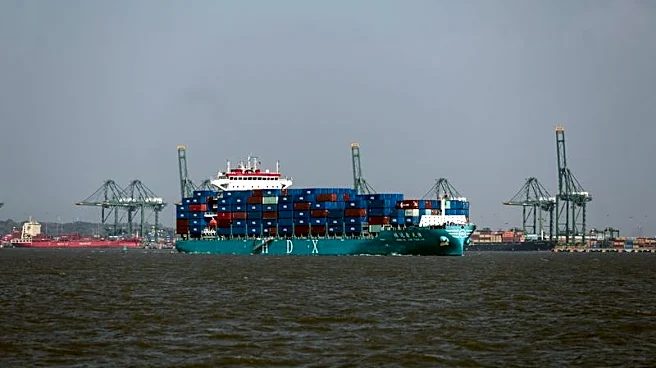
as President Trump had set a deadline of July 4 for the EU to ratify the deal or face increased tariffs on European goods. The committee's vote saw 31 members in favor, six against, and three abstentions. The legislation is expected to be approved by the full EU assembly in mid-June. The trade deal includes capping US levies on most European imports at 15%, while the EU will eliminate tariffs on US industrial goods and improve market access for US agricultural products. The US and EU are significant trading partners, with an annual exchange of $2 trillion in goods and services.
Why It's Important?
This development is significant as it helps to stabilize trans-Atlantic trade relations, which have been strained by previous tariff threats and disputes. The agreement is expected to benefit both economies by reducing trade barriers and fostering a more predictable trading environment. For the US, the deal opens up European markets for its industrial and agricultural products, potentially boosting exports. For the EU, it avoids the imposition of higher tariffs on its goods, which could have negatively impacted European businesses and consumers. The resolution of these trade tensions is crucial for maintaining the economic partnership between the US and the EU, which is one of the largest in the world.
What's Next?
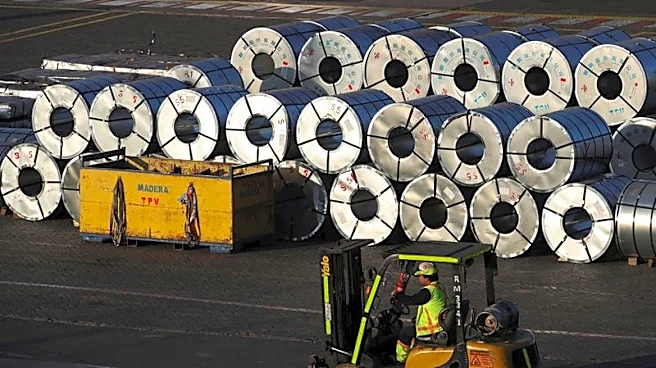
The next step involves the full EU assembly's approval of the legislation in mid-June. If ratified, the trade deal will be implemented, reducing tariffs and enhancing market access as agreed. However, the deal includes a 'sunset' clause, which means it will expire in 2029 unless renewed. This clause provides a timeline for both parties to assess the deal's impact and negotiate any necessary adjustments. Additionally, the US has until the end of the year to remove extra taxes on steel components, which could influence future negotiations. Stakeholders in both regions will likely monitor the implementation closely to ensure compliance and address any emerging issues.