








What's Happening?
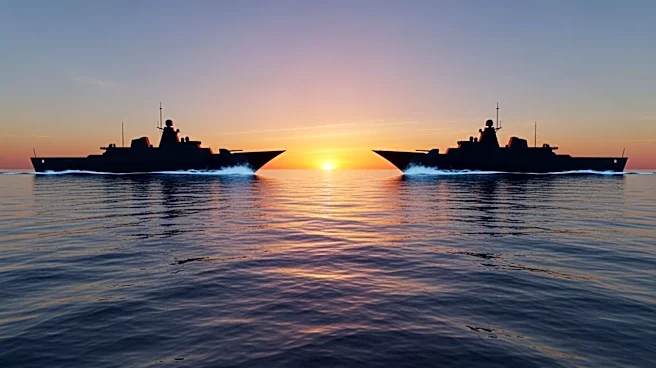
The Chinese military has reportedly used electronic warfare measures to drive away the Dutch frigate HNLMS De Ruyter from waters near the disputed Paracel Islands in the South China Sea. This incident underscores the ongoing international resistance to China's
expansive territorial claims in the region, which are asserted through the controversial 'nine-dash line.' The Dutch vessel, part of a five-month mission focused on regional security cooperation, was accused by Chinese military spokesperson Zhai Shichen of violating China's territorial sovereignty and maritime security. However, the Dutch navy maintains that the frigate operated in accordance with international law and did not enter territorial waters. The South China Sea remains a highly contested area with overlapping claims from multiple countries, including China, Malaysia, the Philippines, Taiwan, and Vietnam.
Why It's Important?
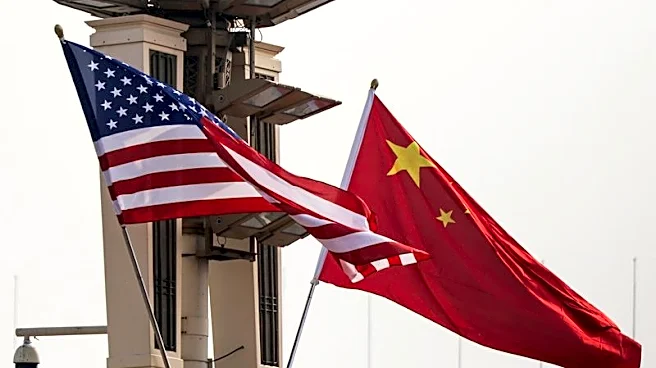
This confrontation between the Chinese military and a Dutch warship highlights the growing international pushback against China's territorial claims in the South China Sea. The region is a critical maritime route with significant geopolitical and economic implications. The incident reflects broader tensions as Western nations, including the Netherlands and the United States, challenge China's assertions of sovereignty. The situation could impact international trade routes and regional security dynamics, potentially leading to increased military presence and maneuvers by foreign powers in the area. The ongoing disputes also have implications for international law, particularly concerning freedom of navigation and the enforcement of the U.N. Convention on the Law of the Sea.
What's Next?
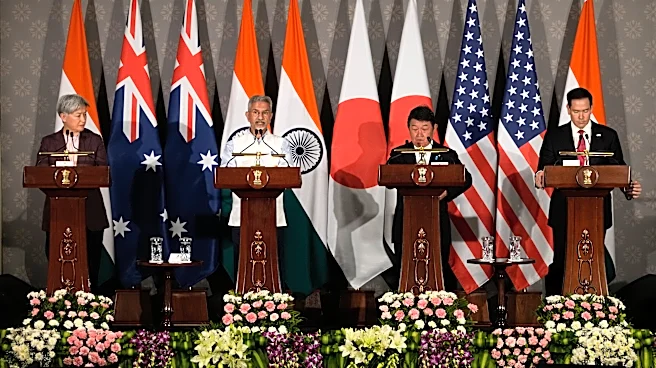
The incident is expected to be a focal point at the upcoming Shangri-La Dialogue in Singapore, Asia's largest annual defense forum. Discussions will likely address China's assertive posture in Asian waters and the broader implications for regional security. U.S. Defense Secretary Pete Hegseth and Dutch defense chief Onno Eichelsheim are scheduled to speak at the event, potentially outlining their countries' positions on maritime security and freedom of navigation. The situation may lead to further diplomatic engagements and military exercises by Western nations in the region, as they seek to counterbalance China's influence.
Beyond the Headlines
The South China Sea dispute is not only a matter of territorial claims but also a symbol of the broader geopolitical struggle between China and Western powers. The region's strategic importance as a major shipping route and its potential natural resources make it a focal point for international diplomacy and military strategy. The incident with the Dutch warship could influence future naval deployments and alliances, as countries navigate the complex dynamics of power and influence in the Indo-Pacific region. Additionally, the situation raises questions about the effectiveness of international law in resolving such disputes and the role of multilateral institutions in maintaining regional stability.