






What's Happening?
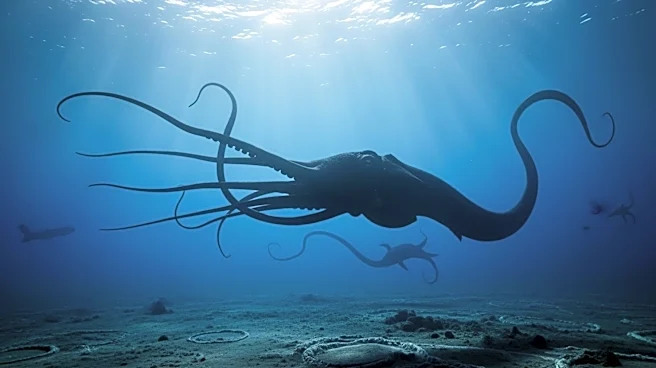
A recent study published in the journal Science suggests the existence of 60-foot-long octopuses that may have been apex predators in the sea between 72 million and 100 million years ago. The research, highlighted by National Geographic, is based on the examination
of 15 fossilized octopus beaks from the Late Cretaceous period. These findings hint at the possibility that these massive octopuses could have preyed on prehistoric predators such as sharks and mosasaurs. The study challenges the traditional view of marine ecosystems dominated by vertebrates. However, some experts, like Christian Klug from the University of Zurich, express skepticism about the size estimates, noting that the conclusions are primarily based on the animals' jaws.
Why It's Important?
The study's findings could reshape our understanding of marine life during the Cretaceous period, suggesting that invertebrates like octopuses played a more significant role as predators than previously thought. This challenges the long-held belief that vertebrates were the dominant predators in ancient marine ecosystems. If further evidence supports these findings, it could lead to a reevaluation of the ecological dynamics of prehistoric oceans. The research also highlights the potential for new discoveries in paleontology, as scientists continue to explore the fossil record for clues about ancient life.